

Hydrogen is no longer a laboratory curiosity. As you plan green-hydrogen plants, hydrogen blending into gas grids, and H2 refueling stations, the valves you specify will decide whether your system is safe, leak-tight, and compliant—or a long-term liability. If you have specified valves for natural gas or steam for years, you cannot simply reuse that playbook for H2.
This guide gives you the engineering fundamentals, the standards, and the product choices you need to specify hydrogen-ready valves with confidence—written for engineers, EPCs, and procurement teams who need answers, not marketing.
Key Takeaways
Hydrogen behaves differently from the fluids you are used to. Three properties should shape every line of your specification:
For you as a specifier, the practical consequence is simple: do not copy a natural-gas datasheet. Start from H2-specific failure modes, then select the valve and material that defeat them.
Not every valve type earns its place in a hydrogen system. Here is where most specifiers land:
Their tight, repeatable shutoff suits H2’s leak sensitivity. For maintenance isolation, double block and bleed (DBB) ball valves let you safely isolate and vent a section without a full system shutdown.
When you face particles, thermal cycling, or need a fire-safe metal-to-metal seal, metal-seated ball valves give you a hardened, galling-resistant seat that survives where soft seats fail.
High-pressure electrolyzer outlets and compressors demand forged bodies with no casting porosity. Our forged trunnion mounted ball valves are engineered for high-pressure H2 with shorter lead times than cast designs. For transmission and H2 pipeline corridors, API 6D pipeline ball valves give you the documented design, testing, and traceability pipeline operators expect.
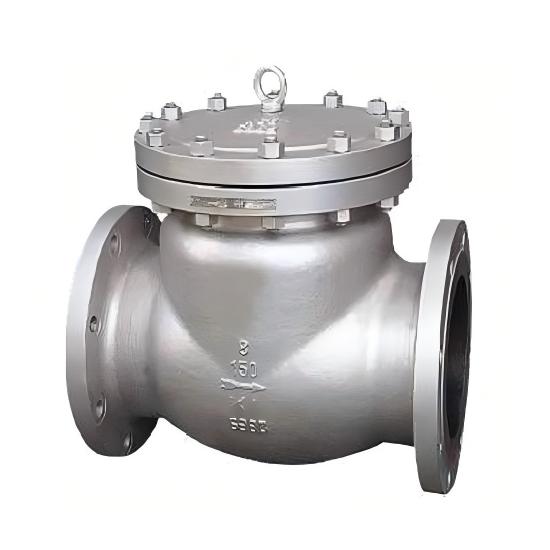
Hydrogen lines need reliable non-return protection against backflow and compressor damage. Dual plate check valves offer compact, low-pressure-drop non-return protection suited to H2 skids and stations.
| Valve type | Best H2 use | Why it fits |
|---|---|---|
| Ball valve (DBB) | Isolation & maintenance | Tight shutoff, safe venting |
| Metal-seated ball | Dirty / high-temp service | Hardened, fire-safe seat |
| Forged trunnion | High-pressure compressors | No casting porosity |
| API 6D ball | Transmission pipelines | Full traceability & testing |
| Dual plate check | Backflow prevention | Compact, low pressure drop |
Material choice is where hydrogen projects succeed or fail. Practical guidance you can put on a spec sheet:
If you are unsure which grade fits your H2 purity and pressure, our engineering team can review your spec sheet before you issue the RFQ—so you do not discover a material mismatch after forging begins.
Three sealing decisions protect your plant and your permit:
Align your specification with these references early—retrofitting compliance is expensive. Use this table as a starting point for your line list:
| Standard | What it covers | Why you need it |
|---|---|---|
| API 6D | Pipeline valve design & testing | Transmission acceptance |
| API 598 | Pressure & leak testing | Verifies tightness |
| API 607 / 6FA | Fire-safe testing | Post-fire integrity |
| ISO 15848-1 | Fugitive emission packing | Leak / compliance |
| NACE MR0175 / ISO 15156 | Sour-service materials | Crack prevention |
| PED 2014/68/EU / ATEX | EU pressure & explosive-atm directives | EU market access |
Full-Think Valve has manufactured industrial valves to API, ISO, and ANSI standards since 2012. Send us your line list, pressure class, and H2 duty, and we will return a qualified recommendation—not a generic catalog pick.
Use this quick-check tool before you issue an RFQ. Click each item to expand the detail.
Purity drives material and sealing choices. Note the hydrogen partial pressure and any impurities before selecting grades.
Sets body rating (ANSI/PN), trim, and seat type. Underspecifying here is the most common cause of field failure.
Map each line to a DBB ball, metal-seated ball, forged trunnion, API 6D, or check valve as appropriate.
Specify 316L / duplex bodies and Stellite or Inconel hard-facing where galling is a risk.
Mandate API 607/6FA and ISO 15848-1 packing to close safety and emissions gaps.
Confirm PED/ATEX (EU), CRN/ASME (North America), and any end-user-specific specs before RFQ.
No. Embrittlement risk rises sharply with material strength—high-strength bolting and precipitation-hardened alloys are most vulnerable, while lower-strength austenitic stainless (316L) and qualified duplex grades tolerate H2 far better. Many operators also require slow strain rate testing (SSRT) or fracture-toughness evidence for critical H2 components. Specify the actual hydrogen partial pressure and purity so your supplier can qualify the exact grade rather than guessing.
Partially, and only after review. Low blend levels (for example up to roughly 5–20% H2 by volume, depending on jurisdiction) may be tolerated by existing steel pipelines and valves, but you must re-evaluate seat elastomers, leakage rates, and compressor compatibility. Soft seats and elastomers that are fine for methane can degrade or leak with H2. Never assume—request a documented fitness-for-service assessment before repurposing assets.
For the EU, expect Pressure Equipment Directive (PED 2014/68/EU) conformity and, where applicable, ATEX for explosive atmospheres. For North America, look for CRN (Canada) and ASME B31.12 / relevant API compliance; specific end-user specs may apply for certain duties. Align certifications with your project’s location before RFQ to avoid costly re-work.
Size from your mass or volume flow and allowable velocity. Because H2 is low-density, line velocities are often capped (commonly around 20–30 m/s in piping, lower at valve outlets) to limit erosion and static buildup. Undersizing forces higher velocity and leakage risk; oversizing wastes budget and complicates control. Share your flow, pressure, and temperature envelope with the valve supplier for a verified Cv.
Actuation becomes mandatory where fail-safe action, remote operation, or integration with a safety instrumented system (SIS) is required—typically on compressor isolation, ESD, and automated skids. Manual lever or gear valves are acceptable for low-risk, infrequently operated isolation, but you should document the rationale. For any valve inside a classified explosive area, consider whether remote operation reduces personnel risk.
Standard carbon-steel floating ball valves may ship from stock in days; forged trunnion or metal-seated H2-qualified valves typically run several weeks to a few months depending on size, material, and required NDT (for example RT/UT), PWHT, and certification. Building H2 qualification and forge lead time into your schedule—rather than ordering late—is the single biggest lever to avoid project delays.
From the Full-Think blog:
Recommended reads we plan to publish:
(All images are sourced from the internet. In the event of any copyright infringement, please contact us and we will remove the content promptly.)