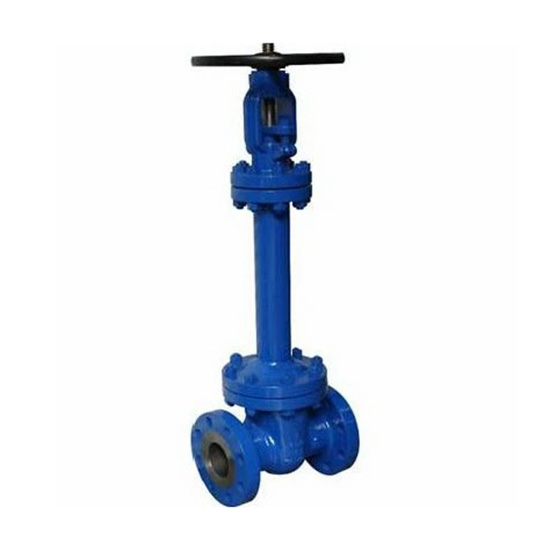
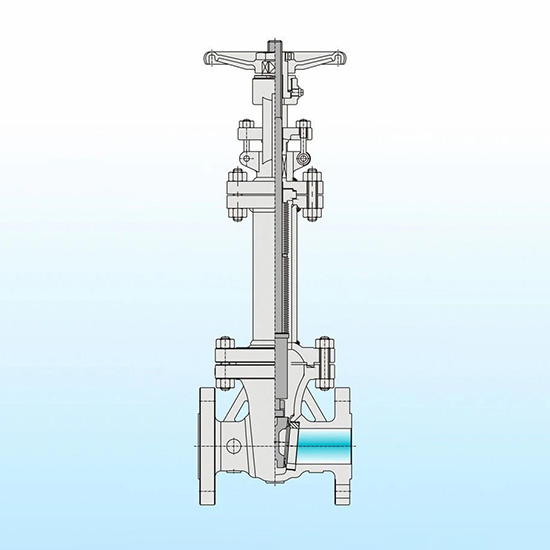
General Description:
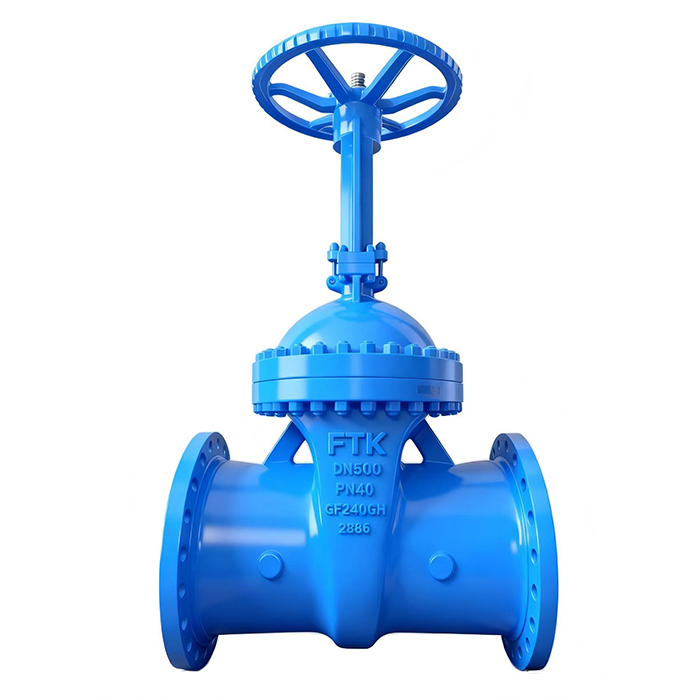
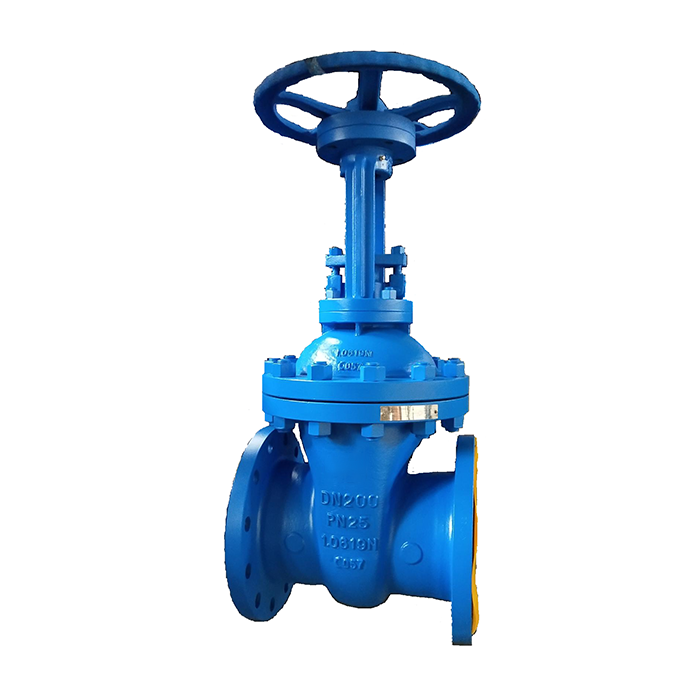
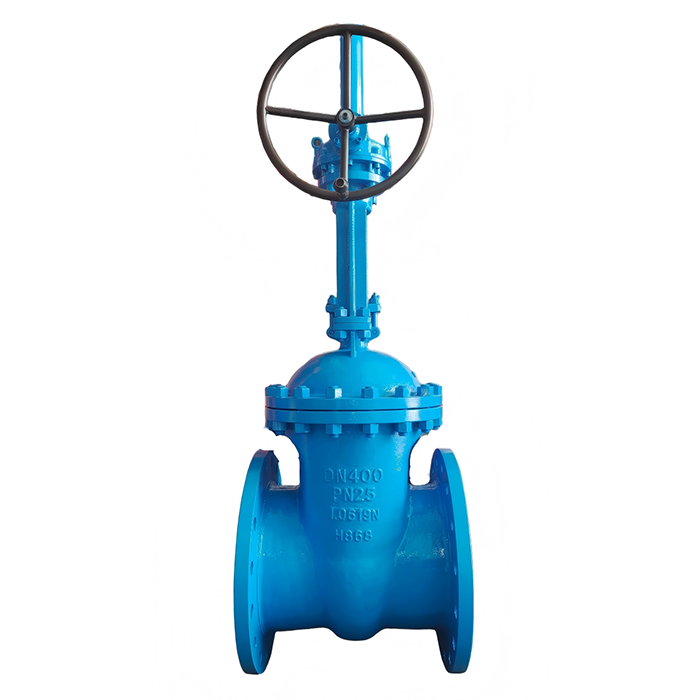
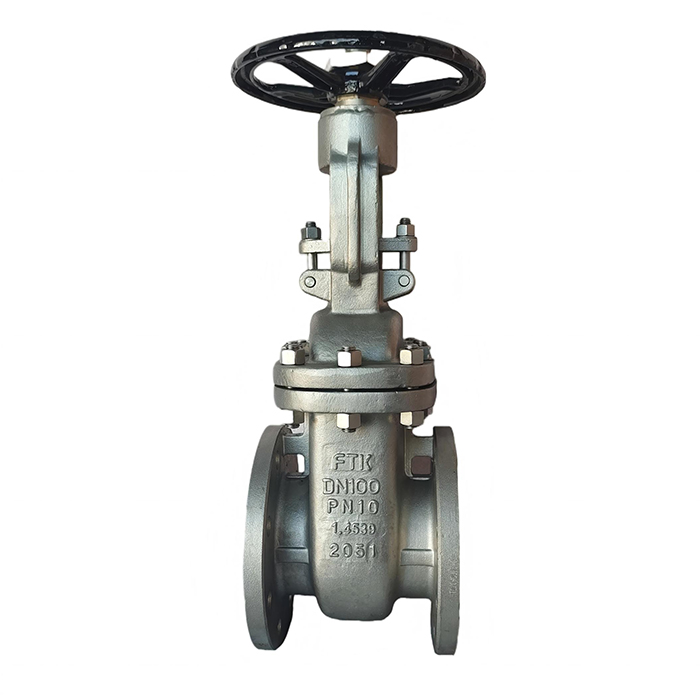
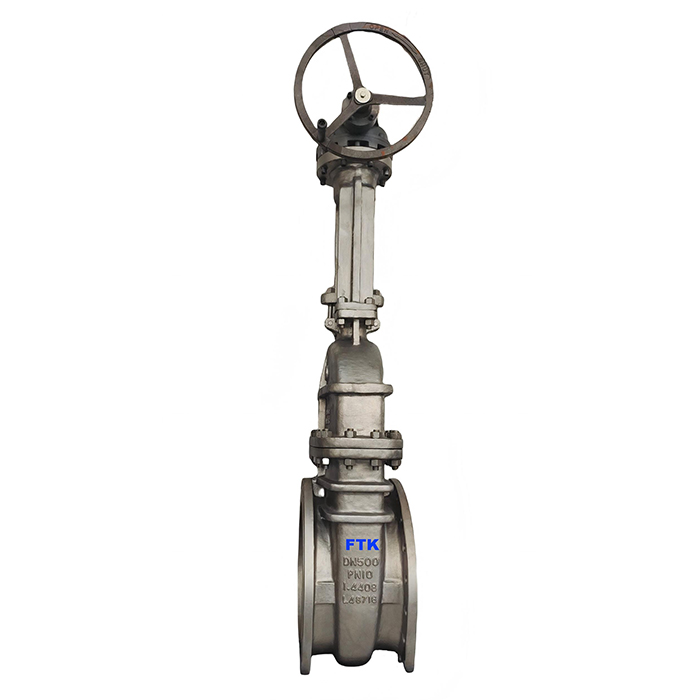
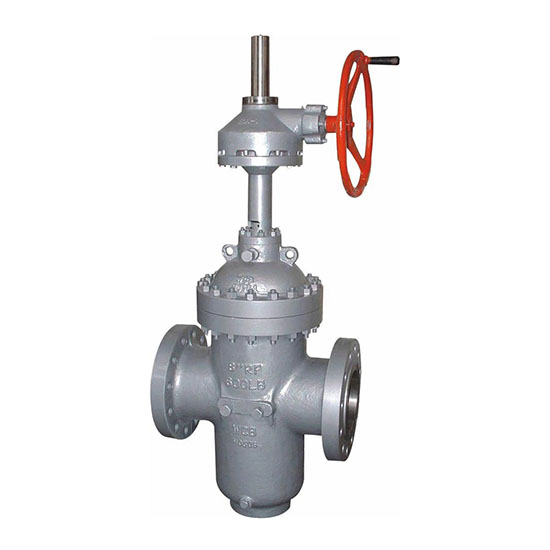
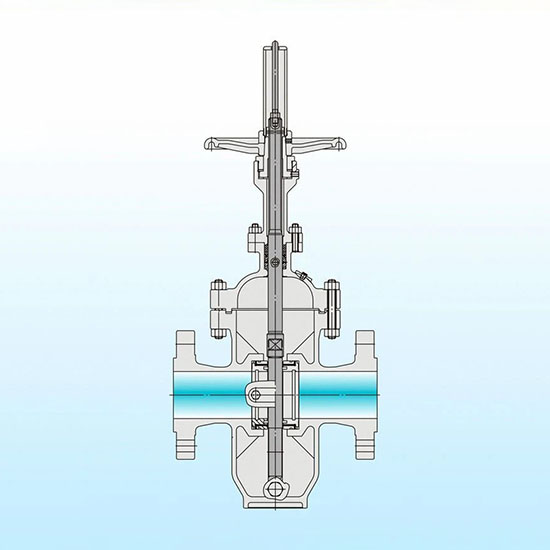
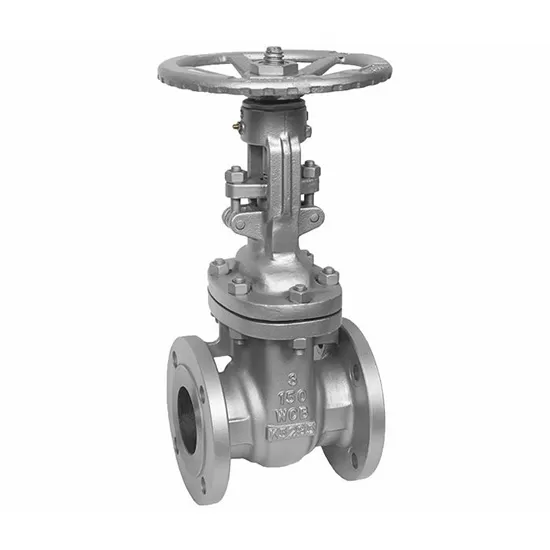
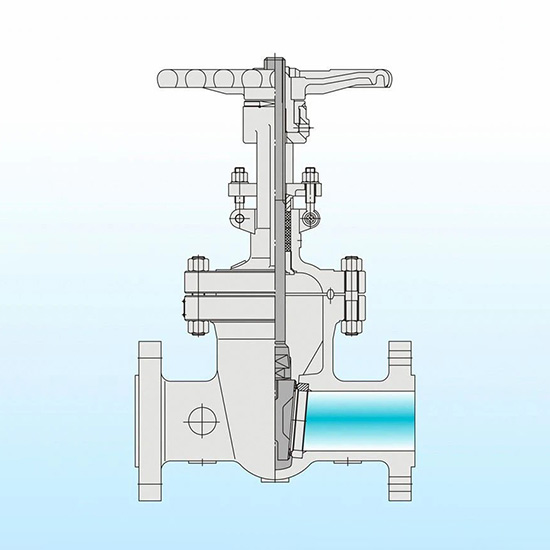
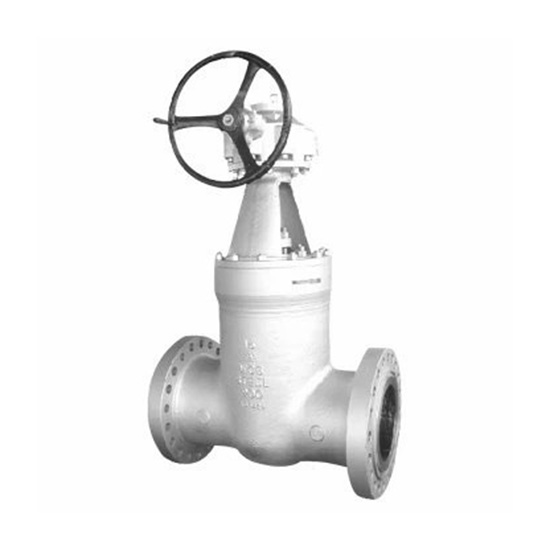
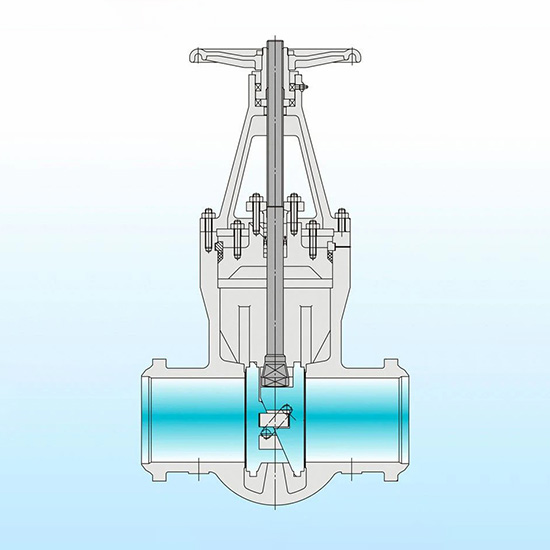
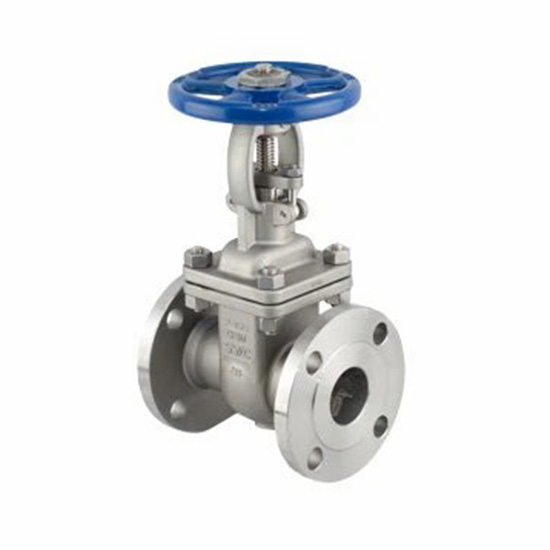
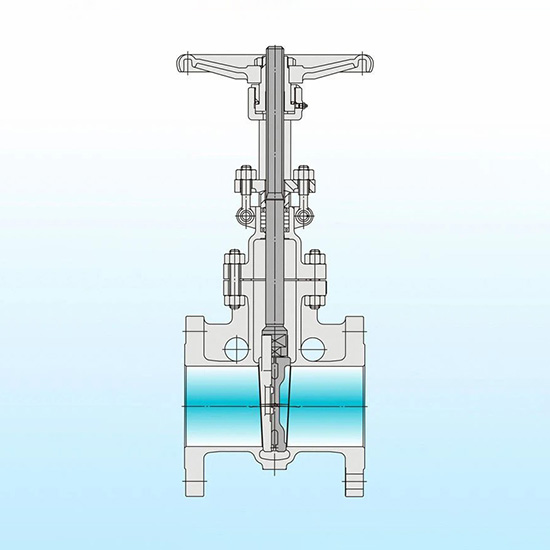
Non-rising stem gate valve is used where vertical space is limited or underground. The stem is threaded into the gate. As the handwheel on the stem is rotated, the gate travels up or down the stem on the threads while the stem remains vertically stationary. This type of valve has a pointer indicator threaded onto the upper end of the stem to indicate the position of the gate.
Design Standard:
Basic Design: API 600/BS1414, ASME B16.34, DIN/EN 1984
Face to Face (End to End): ANSI B16.10;
EN 558-1 GR.14, 15, 26 (DIN3202 F4/F5/F7/F8);
ČSN 133045 or GOST 3706
End Connection: ANSI B16.5, MSS SP-44 / ASME B16.47, ANSI B16.25, EN 1092
Test & Inspection: API 598, EN12266
Non-Rising Stem Gate Valve for Industrial Pipeline Isolation
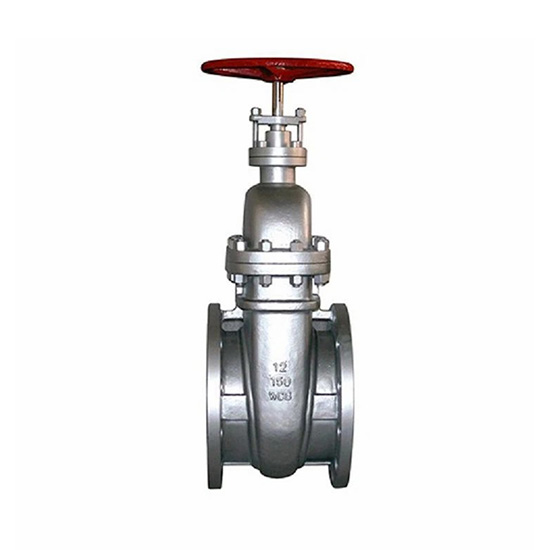
FTK NRS gate valves feature a non-rising stem structure designed for reliable shut-off in industrial pipeline systems. Because the stem does not move upward during operation, the valve requires less vertical installation space and is suitable for confined locations where a rising stem design may be impractical.
Available in multiple body materials, pressure ratings, connection types, and operating configurations, FTK non-rising stem gate valves can be selected according to pipeline conditions, media characteristics, and project requirements.
Key Benefits
- Space-saving non-rising stem design
- Reliable isolation for industrial pipelines
- Cast steel body for demanding operating conditions
- Multiple material and pressure class options
- Manual, gearbox, or actuator operation available
- Custom configurations for project requirements
CTA Buttons
- Request a Quote
- Get Technical Specifications
What Is an NRS Gate Valve?
An NRS gate valve, also called a non-rising stem gate valve, uses a stem that rotates without moving vertically outside the valve body. During operation, the gate moves up or down internally while the external stem remains in a fixed position.
This design reduces the overall installation height and makes the valve suitable for pipelines installed in limited spaces, underground systems, valve chambers, and other locations where vertical clearance is restricted.
Unlike an OS&Y or rising stem gate valve, the stem position of an NRS gate valve does not provide a direct visual indication of whether the valve is open or closed. A position indicator or actuator feedback device may therefore be added when required.
Key Features
Non-Rising Stem Structure
The stem remains at a fixed external height during opening and closing, reducing the vertical space required for installation and operation.
Reliable Pipeline Isolation
The gate moves perpendicular to the flow direction to provide full opening or complete shut-off. The valve is primarily intended for isolation service rather than frequent throttling.
Cast Steel Construction
The cast steel body provides mechanical strength for industrial pipeline applications involving elevated pressure, temperature, or demanding operating conditions.
Low Flow Resistance
When fully open, the gate is lifted away from the flow path, helping create a relatively straight passage with limited pressure loss.
Flexible Operation Options
Depending on valve size and operating requirements, the valve can be supplied with a handwheel, gearbox, electric actuator, pneumatic actuator, or hydraulic actuator.
Custom Material Selection
Body, trim, stem, seat, packing, and sealing materials can be selected according to the operating medium, pressure, temperature, and corrosion conditions.
Technical Specifications
| Parameter | Available Configuration |
| Product Type | Non-Rising Stem Gate Valve |
| Body Construction | Cast Steel |
| Stem Design | Non-Rising Stem |
| Size Range | Confirm according to FTK production range |
| Pressure Rating | Confirm according to product model |
| Body Material | Carbon Steel, Stainless Steel, Alloy Steel |
| Trim Material | Stainless Steel or Custom Alloy |
| End Connection | Flanged, Butt-Weld, or Customized |
| Operation | Handwheel, Gearbox, Electric, Pneumatic, Hydraulic |
| Flow Direction | Bidirectional, subject to valve design |
| Working Medium | Water, Oil, Gas, Steam, and Industrial Fluids |
| Testing Standard | Confirm according to actual product standard |
| Design Standard | Confirm according to actual valve specification |
The final valve configuration should be selected according to pipeline size, pressure class, temperature, medium, connection standard, and required operating method.
How Does an NRS Gate Valve Work?
When the handwheel or actuator rotates the stem, the stem threads move the gate vertically inside the valve body.
Opening Process
- The stem rotates.
- The gate moves upward inside the valve.
- The flow passage gradually opens.
- At the fully open position, the gate is removed from the main flow path.
Closing Process
- The stem rotates in the opposite direction.
- The gate moves downward.
- The sealing surfaces come into contact.
- The pipeline is isolated.
NRS gate valves are generally recommended for fully open or fully closed service. Using a gate valve for continuous throttling may cause seat wear, vibration, erosion, and unstable flow control.
NRS Gate Valve vs. Rising Stem Gate Valve
| Comparison | NRS Gate Valve | Rising Stem Gate Valve |
| Stem Movement | Stem rotates without rising externally | Stem rises and falls during operation |
| Installation Height | Requires less vertical space | Requires additional vertical clearance |
| Valve Position Indication | Position is not directly visible from stem movement | Stem position indicates open or closed status |
| Typical Installation | Confined areas, valve chambers, underground systems | Refineries, process plants, exposed industrial pipelines |
| Stem Exposure | Stem threads are generally located inside the valve | Stem threads are exposed outside the valve body |
| Maintenance Consideration | Internal threads may contact the process medium | External stem condition is easier to inspect |
| Best Selection Basis | Limited space and compact installation | Visible valve position and easier stem inspection |
The correct design depends on installation space, maintenance requirements, medium characteristics, operating frequency, and the need for visible position indication.
Material Options
Carbon Steel
Carbon steel bodies are commonly selected for general industrial pipelines, oil and gas service, and applications requiring good mechanical strength.
Stainless Steel
Stainless steel options are suitable for corrosive media, chemical processing, and operating environments where improved corrosion resistance is required.
Alloy Steel
Alloy steel can be selected for higher-temperature or more demanding service conditions, depending on the required pressure-temperature rating.
Trim and Sealing Materials
Trim, seat, stem, packing, and gasket materials should be selected according to:
- Fluid composition
- Operating temperature
- Pressure class
- Corrosion conditions
- Leakage requirements
- Service frequency
Typical Applications
Oil and Gas Pipelines
Used for pipeline isolation in upstream, midstream, storage, and processing systems where compact valve installation is required.
Petrochemical Processing
Suitable for process lines carrying oil, gas, hydrocarbons, and compatible industrial fluids.
Power Generation
Can be applied in auxiliary systems, water lines, oil systems, and other isolation services based on the selected material and pressure rating.
Industrial Water Systems
Used for shut-off and isolation in process water, cooling water, and utility pipelines.
Underground and Confined Installations
The non-rising stem design reduces installation height, making it suitable for valve chambers, buried pipelines, and locations with limited overhead clearance.
General Industrial Piping
Applicable to manufacturing plants, chemical facilities, terminals, and other systems requiring reliable on-off pipeline isolation.
Selection Guide
To select a suitable NRS gate valve, provide the following information:
- Nominal valve size
- Pressure class or PN rating
- Operating temperature
- Fluid or medium
- Body and trim material
- Flange or welding standard
- Required leakage class
- Manual or actuated operation
- Installation position
- Special testing or certification requirements
For oil, gas, steam, corrosive media, or high-temperature service, material compatibility and pressure-temperature ratings should be confirmed before ordering.
Quality Inspection and Testing
FTK can inspect and test NRS gate valves according to the applicable project specification and agreed valve standard.
Typical inspection items may include:
- Material verification
- Dimensional inspection
- Visual inspection
- Shell pressure testing
- Seat leakage testing
- Operational testing
- Coating inspection
- Marking and documentation review
Testing standards and acceptance criteria should be confirmed according to the actual product design and customer requirements.
Why Choose FTK NRS Gate Valves?
Application-Based Valve Selection
Valve materials, pressure ratings, connections, and operating methods can be configured according to the actual pipeline conditions.
Multiple Manufacturing Options
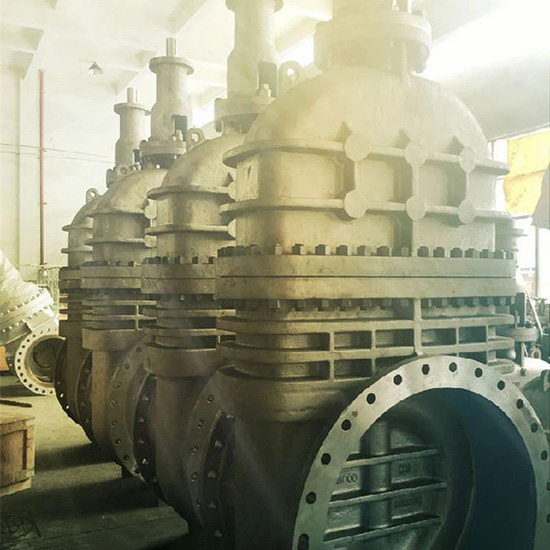
FTK provides cast steel gate valve solutions in different sizes, pressure classes, materials, and connection types.
Quality Control
Each valve can be inspected and tested according to agreed technical requirements before shipment.
Project Support
Technical documentation, drawings, test reports, material certificates, and project-specific documents can be provided when required.
OEM and Custom Solutions
Custom nameplates, coatings, materials, dimensions, actuators, and packaging options are available for distributors, contractors, and industrial projects.
FAQs
What does NRS mean on a gate valve?
NRS means non-rising stem. The stem rotates during operation but does not move upward or downward outside the valve body.
Where is an NRS gate valve commonly used?
NRS gate valves are commonly used in confined pipeline installations, valve chambers, underground systems, industrial water lines, oil and gas pipelines, and general isolation applications.
What is the difference between NRS and OS&Y gate valves?
An NRS gate valve has a stem that remains at a fixed external height, while an OS&Y gate valve has a stem that rises as the valve opens. OS&Y valves provide visible position indication, while NRS valves require less installation height.
Can an NRS gate valve be used for throttling?
Gate valves are normally intended for fully open or fully closed service. Continuous throttling may damage the gate and seat and can result in unstable flow conditions.
Is an NRS gate valve suitable for underground installation?
The compact non-rising stem structure can be suitable for underground or confined installation. The final valve design, coating, sealing, extension stem, and operating arrangement should be selected according to the installation environment.
What materials are available?
Common body materials include carbon steel, stainless steel, and alloy steel. Trim, seat, packing, and sealing materials can be selected according to the fluid, temperature, pressure, and corrosion conditions.
Can the valve be supplied with an actuator?
Yes. Depending on valve size, torque, and project requirements, NRS gate valves may be supplied with electric, pneumatic, hydraulic, or gearbox operation.
What information is needed for a quotation?
Please provide the valve size, pressure rating, material, medium, temperature, connection standard, operation method, quantity, and any special testing or documentation requirements.
Request an NRS Gate Valve Quote
Send FTK your pipeline size, pressure rating, operating medium, temperature, material preference, connection type, and required operation method. Our team will recommend a suitable NRS gate valve configuration for your application.


 Optimized by Seraphinite Accelerator