


When pipeline infrastructure expands to large diameters—typically 12 inches (DN300) and above—the mechanical and financial anti-patterns of valve selection change dramatically. What works perfectly well for a 2-inch pipe can become an operational and financial disaster when scaled up to larger dimensions. In large diameter flow control, project engineers and procurement managers consistently face a critical design decision: High-Performance Butterfly Valve vs. Ball Valve.
Both valve types offer reliable quarter-turn isolation, but their geometric boundaries, weight profiles, and fluid dynamics are fundamentally different. Since its establishment in 2012, FTK, a certified industrial valves manufacturer, has manufactured specialized heavy-duty flow mechanisms for international projects. As a professional Industrial Valve Supplier, we provide this comprehensive engineering analysis to help you optimize large-scale fluid system layouts.
In standard pipeline layouts, small-diameter valves are selected primarily based on chemical resistance and basic pressure-temperature limits. However, when selecting components for large-scale systems, three severe engineering limitations emerge:
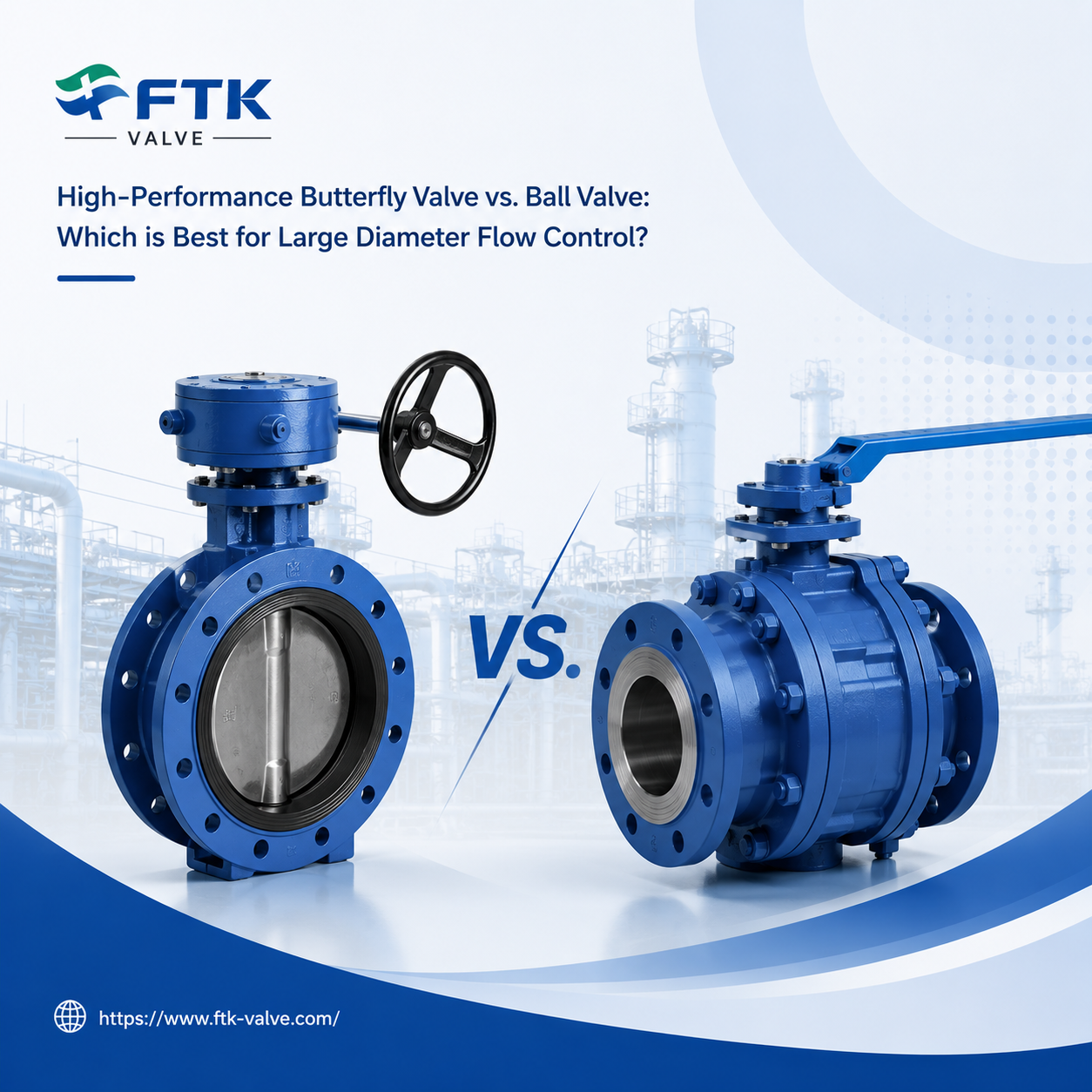
(All images are sourced from the internet. In the event of any copyright infringement, please contact us and we will remove the content promptly.)
Modern high-performance butterfly valves are engineered precisely to conquer large-diameter space and weight limitations without sacrificing sealing integrity. Unlike basic water valves, these advanced units utilize distinct geometry to operate in rugged conditions.
To eliminate the historical friction wear associated with soft liners, premier valves suppliers utilize eccentric stem geometry. The pinnacle of this technology is the Triple Offset Butterfly Valve. This design creates a camming action where the disc seals tightly into the metal seat only at the final millimeter of closure, enabling friction-free operation and a true metal-to-metal bubble-tight seal.
Key Advantages of High-Performance Butterfly Valves:
For low-pressure utility water, water treatment, or general utility loops, a heavy-duty Resilient Seated Concentric Butterfly Valve provides an unparalleled return on investment (ROI).
While butterfly valves win the space and weight comparison, ball valves remain dominant in critical oil, natural gas, and severe chemical trunklines due to their uncompromised structural properties.
In an industrial ball valve, closing the mechanism means rotating a solid sphere with a bored hole. When fully opened, the internal flow path is perfectly smooth and matches the inner diameter of the pipe. This provides two key benefits:
Key Strengths of Large Scale Ball Valves:
Select pipe size to compare engineering footprint and savings.
Trunnion Ball Valve
Triple Offset Butterfly
The following technical data matrix illustrates the distinct selection boundaries for a typical 24-inch (DN600) Class 150 pipeline component:
| Engineering Metric | Triple Offset Butterfly Valve | Trunnion Ball Valve (Full Bore) |
|---|---|---|
| Typical Weight (24-inch) | ~260 kg (Lightweight) | ~1,450 kg (Extremely Heavy) |
| Face-to-Face Space | 154 mm (Ultra-Compact) | 813 mm (Demands Deep Vault) |
| Pressure Drop & Cv | Moderate (Disc restricts center) | Zero Restraint (Maximum Cv) |
| Inline Mechanical Pigging | Impossible | Fully Compatible |
| Relative Procurement Cost | Highly Economical (1x) | Premium Investment (4x – 5x) |
Optimize your structural engineering footprints and actuation budgets. FTK VALVE provides certified large-diameter ball and high-performance butterfly valves tailored to your project parameters.
To help guide procurement, use this operational checklist developed by FTK’s engineering desk:
Choose the High-Performance Butterfly Valve if: Space and structural pipe-rack weight limits are restricted, the media is clean fluid, gas, or steam, and the primary project goal is minimizing upfront procurement and heavy actuator expenses.
Choose the Trunnion Ball Valve if: The pipeline requires frequent mechanical cleaning (pigging), the media contains highly abrasive heavy crude or thick slurries, or you are engineering a high-pressure api 6d ball valve transmission line where maintaining a near-zero pressure drop is a long-term requirement.
Concentric butterfly valves rely on a rubber liner that remains in constant contact with the disc. At larger diameters and higher pressures, the torque required to cycle the valve increases exponentially, causing the rubber liner to tear or deform over time.
Yes, a Triple Offset Butterfly Valve can replace a ball valve in many applications. It provides bidirectional, bubble-tight metal sealing that meets API 598 standards, though it remains incompatible with scraping pig operations.
A full-bore trunnion ball valve provides the highest possible Cv value because it behaves exactly like an open straight pipe. A butterfly valve disc is always positioned in the flow stream, creating minor turbulence and slightly reducing the ultimate Cv value.
Because an 18-to-24-inch ball valve is extremely heavy, it requires specialized cranes for field positioning and heavy-duty concrete foundations to prevent the massive weight from bending or sagging the adjacent piping network.
Cavitation risks are typically higher in butterfly valves when they are partially open for throttling, as the fluid is forced around the edges of the central disc, generating high-velocity shear zones that can pit the valve body.
Large ball valve dimensions are governed strictly by API 6D or ASME B16.10. High-performance butterfly valve face-to-face distances are dramatically narrower and follow standards like API 609 or ISO 5752 short series.
No. Elastomer compounds like EPDM or NBR will quickly degrade under steam temperatures. For steam distribution networks, a metal-seated triple offset configuration or an industrial globe/ball valve is required.
Since 2012, FTK has utilized standardized ISO 5211 top flanges across both our ball and butterfly configurations, allowing engineers to interface seamlessly with standard pneumatic, electric, or hydraulic actuators.
For midstream gas trunklines, an API 6D trunnion ball valve equipped with Double Block and Bleed (DBB) capabilities is typically preferred, as it allows operators to vent the valve cavity safely during inline operations.
Yes. As a highly flexible industrial valves manufacturer, FTK can engineer custom spool pieces or specialized extended bodies to drop directly into older piping infrastructures without modifications.
In large-diameter flow control networks, making a selection based purely on unit cost often overlooks critical engineering variables. High-performance butterfly valves offer immense space and structural weight advantages, making them the ideal choice for modern processing skids and water networks. Conversely, ball valves offer maximum flow parameters and inline cleaning compatibilities for long-distance trunklines.
Since its founding in 2012, FTK has served as a dedicated valves manufacturer and trustworthy Industrial Valve Supplier, helping global companies balance structural limits and procurement costs. Contact the application engineering team at FTK VALVE today to secure precise engineering assistance and high-durability products for your next infrastructure layout.
 Optimized by Seraphinite Accelerator
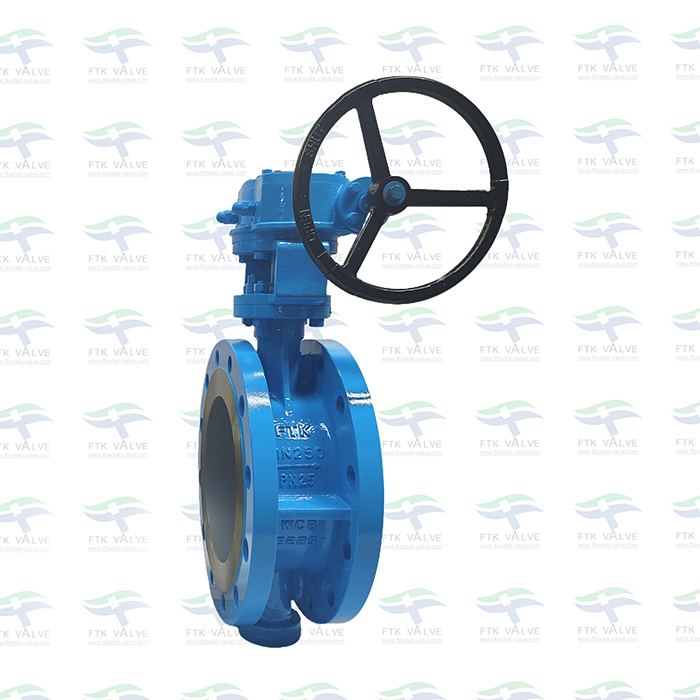 (All images are sourced from the internet. In the event of any copyright infringement, please contact us and we will remove the content promptly.)