


In the high-pressure world of industrial fluid transmission, a ball valve is often chosen for its rugged body and quarter-turn isolation efficiency. However, from the perspective of a pipeline maintenance engineer, the true bottleneck of any system’s lifecycle is not the metal shell—it is the ball valve seat material. The seat is the critical sealing element that undergoes continuous mechanical friction, fluid erosion, and thermal cycles to maintain a bubble-tight shutoff.
Selecting an incorrect polymer compound can cause catastrophic seat deformation, premature seat blowout, or extreme torque spikes that freeze automated actuators. Since its establishment in 2012, FTK, a premier industrial valves manufacturer, has engineered custom sealing configurations for global clients. As a reliable Industrial Valve Supplier, we provide this comprehensive guide to help procurement teams balance budget, pressure limitations, and operational safety when evaluating PTFE vs RPTFE vs PEEK.
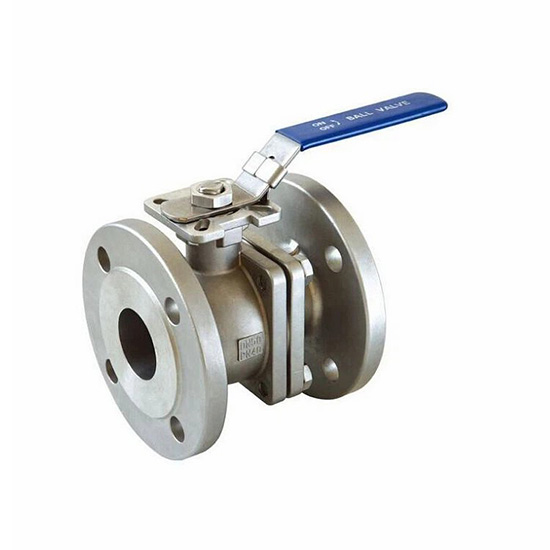
(All images are sourced from the internet. In the event of any copyright infringement, please contact us and we will remove the content promptly.)
Virgin Polytetrafluoroethylene (PTFE) is the traditional benchmark for soft-seated ball valves. Composed entirely of carbon and fluorine bonds, it exhibits near-perfect chemical inertness.
Key Technical Profiles of Virgin PTFE:
Despite its excellent chemical traits, pure PTFE suffers from a structural flaw known as “cold flow” or polymer creep. Under continuous mechanical load and pressure cycles, the material slowly deforms and migrates. Therefore, it is rarely deployed as a Floating Ball Valve Seat Material in lines exceeding ANSI Class 150/300, as the fluid force will eventually push the soft polymer out of its machining pocket.
To overcome the cold flow limitations of virgin fluoropolymers, experienced valves suppliers utilize Reinforced Polytetrafluoroethylene (RPTFE). This is engineered by embedding structural reinforcing agents—most commonly 15% glass fiber or carbon powder—directly into the PTFE base matrix.
The Structural Benefits of RPTFE:
The addition of glass fibers alters the friction coefficient slightly (raising it to roughly 0.12 – 0.18). Consequently, a valve fitted with RPTFE requires a higher torque output from its automation system. RPTFE is the definitive standard choice for high-durability floating ball valve applications across water utilities, low-pressure steam, and petrochemical refining.
When engineering requirements shift into extreme environments—such as deep-sea production, oil transmission, or superheated steam networks—polymeric fluoropolymers reach their physical limits. For these conditions, Polyetheretherketone (PEEK), a high-performance organic semi-crystalline thermoplastic, is required.
Why PEEK Conquers Severe Service:
Because PEEK is highly rigid, it demands precise machining tolerances and exerts immense friction against the ball (coefficient of 0.25 to 0.35). This leads to a substantial increase in operational torque. To prevent stem damage, PEEK is almost exclusively implemented in a heavy-duty PEEK Seat Trunnion Valve setup, where the fixed trunnion bearings absorb the hydraulic forces instead of the soft polymer face.
Input pipeline parameters to find the ideal sealing compound.
Recommended Seat Material
To help pipeline engineers make data-driven decisions, the metallurgical and polymer lab at FTK has compiled this hard material matrix:
| Physical Parameter | Virgin PTFE | RPTFE (15% Glass) | Industrial PEEK |
|---|---|---|---|
| Temperature Profile | -200°C to +180°C | -200°C to +230°C | -50°C to +260°C |
| Max Pressure Rating | ANSI Class 150 - 300 | ANSI Class 150 - 600 | ANSI Class 900 - 2500 |
| Creep (Cold Flow) | High Vulnerability | Moderate / Low | Virtually Zero |
| Friction & Valve Torque | Lowest (Base 1.0) | Medium (Base 1.3) | Extreme (Base 2.0+) |
| Primary Architecture | Floating Valves | Floating & Light Trunnion | Heavy Duty Trunnion |
Don't leave your infrastructure safety to guesswork. FTK VALVE's engineering team provides tailored API 6D certified ball valve solutions built for your exact pressure, temperature, and chemical parameters.
You should transition to PEEK when your continuous pipeline temperature exceeds 200°C, or when the operational pressure goes beyond ANSI Class 600. PEEK is also necessary if the media contains highly abrasive particulate matter that would quickly erode an RPTFE surface.
The api 6d ball valve standard mandates strict testing and sealing integrity metrics, often requiring features like Double Block and Bleed (DBB). If the seat material undergoes cold flow or thermal degradation, the valve will fail the cavity pressure test, compromising midstream transmission safety.
Absolutely. PEEK seats create significantly more mechanical drag against the ball than PTFE. When sizing an actuator, an electrical or pneumatic system paired with a PEEK-seated valve must be oversized by a safety factor of 1.5 to 1.8 to handle the extreme breakaway torque requirements.
The number one killer of soft seats is construction debris (weld slag, sand, rust) left in un-flushed pipelines. These particles embed themselves into soft materials like PTFE/RPTFE during initial commissioning cycles, creating permanent micro-leakage channels.
Yes, PEEK can achieve an API 598 Rate A (zero-leakage) bubble-tight shutoff, but it requires significantly higher mechanical seating seat loads from the stem and springs than soft fluoropolymers due to its high material hardness.
It is not legally banned, but it is technically avoided for primary seal rings in high-pressure oil and gas systems. It is primarily reserved for low-pressure chemical injection lines, utility water service, or as static O-ring backing seals rather than dynamic dynamic seat seals.
While PEEK possesses broad resistance, it is vulnerable to highly concentrated oxidizing acids, such as nitric and sulfuric acid. For highly aggressive chemical service, virgin PTFE or specialized metal-to-metal seating remains the superior choice.
Carbon-filled RPTFE uses carbon powder as the reinforcing material instead of glass fibers. It provides superior thermal conductivity and a lower coefficient of friction than glass-filled alternatives, making it highly effective for steam-jacketed industrial applications.
For cryogenic service (such as LNG down to -196°C), virgin PTFE and specially modified RPTFE remain flexible enough to maintain a tight seal. Standard PEEK becomes extremely brittle at sub-zero temperatures and will crack under dynamic pressure cycles.
PEEK is an advanced organic polymer that carries a high raw-material manufacturing cost. Furthermore, because it behaves similarly to metal, it requires longer machining cycles and tighter tolerance checks by the valves suppliers, which increases production costs.
In modern industrial piping, there is no single "perfect" polymer; there is only the mathematically correct material for your specific environment. Virgin PTFE remains the premier champion of low-torque, highly corrosive chemical applications. RPTFE stands as the versatile, cost-effective workhorse of standard industrial pipelines, and PEEK serves as the high-strength option for high-pressure, severe-service midstream energy grids.
Since 2012, FTK has bridged the gap between polymer material science and mechanical manufacturing precision. Partnering with a dedicated valves manufacturer ensures that your projects are supported by rigorous laboratory calculations and strict quality control protocols. Contact FTK VALVE today to consult with our application engineers and secure the optimal configuration for your pipeline network.
 Optimized by Seraphinite Accelerator