


When you are laying out a piping system or planning a shutdown replacement, one material decision quietly sets the tone for everything that follows: should the valve body be cast steel or forged steel? The two look similar on a spec sheet, but they behave very differently once they are welded into a live line. This guide walks you through the real differences, how each is made, what the standards actually require, and where each construction earns its place, so you can specify with confidence instead of guessing.
The short version: neither is better in the abstract. Forged steel wins on pressure, fatigue, and thermal cycling; cast steel wins on bore size and budget. Your job is to match the body to the service. Below, we break down exactly how to do that.
The difference starts on the factory floor, long before the valve reaches your site. A cast steel valve begins as molten steel poured into a mold, where it cools and solidifies into shape. A forged steel valve starts as a solid billet that is compressed under enormous pressure until the metal flows into the body form.
That single contrast, pour versus compress, explains almost everything you care about later. Casting can leave microscopic porosity as the metal cools, and its grain structure is random. Forging aligns the grain flow along the shape of the body, squeezes out voids, and produces a denser, more uniform material. For you, that translates into higher fatigue resistance and better behavior under repeated pressure and temperature swings.
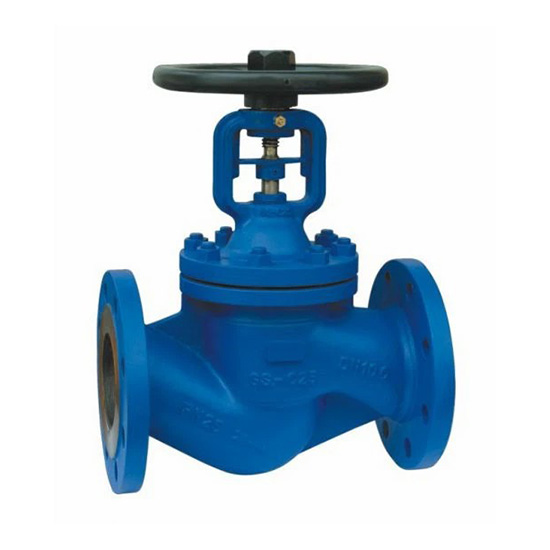
When you open a datasheet, the body material tells you which family you are looking at. Forged carbon-steel bodies are most often built to ASTM A105, with A182 covering alloy and stainless grades. Cast carbon-steel bodies typically follow ASTM A216 Grade WCB, with A217 for cast alloy steel. These designations are not interchangeable, and mixing them up during procurement is a classic source of field failures.
For your peace of mind, the practical takeaway is simple: A105-style forgings give you the dense grain structure described above, while WCB castings give you the moldability needed for large, complex bodies. Both are mature, well-understood standards. The choice is about fit for service, not about one being cheap and the other premium.
Forged steel valves are the workhorses of high-pressure, high-temperature, and cyclic service. You will typically see them specified from ASME Class 800 up to Class 2500 and beyond, and they hold up where thermal cycling would eventually crack a cast body. Cast steel valves cover the broad middle of industry, Class 150 through Class 600, and they are the natural choice as bore sizes climb.
Over the past decade, the build-out of LNG import terminals, offshore production platforms, and high-pressure hydrogen pipelines has steadily raised the bar on valve integrity, which is why forged construction now anchors the most demanding isolation points in those projects. At the same time, the steady expansion of water treatment, desalination, and general utility networks has kept demand strong for larger-bore cast steel valves, where project economics favor readily available, economical construction. In other words, both constructions are growing, just in different corners of the industry.
Specifying for high pressure or thermal cycling?
Explore our forged steel gate valve range, built to API 602 with the grain density your critical lines need.
If you are specifying gate valves, two standards come up constantly. API 600 covers bolted-bonnet cast steel gate valves in larger sizes and moderate-to-high pressure classes. API 602 covers compact forged steel gate valves, typically NPS 1/4 through 2, for the high-pressure, small-bore service where forged bodies shine.
Knowing which standard applies to your line removes ambiguity when you issue a purchase order. If a vendor quotes an “API gate valve” without specifying 600 or 602, that is your cue to ask which construction they mean.
| Attribute | API 600 | API 602 |
|---|---|---|
| Construction | Cast steel | Forged steel |
| Typical size range | NPS 2 to 24 and larger | NPS 1/4 to 2 |
| Common pressure classes | Class 150 to 600 and above | Class 800 to 2500 |
| Bonnet type | Bolted bonnet | Bolted or union bonnet, compact |
| Best for | General and utility service, larger bore | High-pressure, small-bore critical service |
| Feature | Forged Steel | Cast Steel |
|---|---|---|
| Grain structure | Aligned, dense, no porosity | Random, potential porosity |
| Pressure class | Class 800 to 2500 and above | Class 150 to 600 typical |
| Size range | Small bore, up to about NPS 4 common | Larger bore, NPS 2 and above |
| Weight | Lighter for same rating | Heavier |
| Unit cost | Higher | Lower |
| Fatigue resistance | High | Moderate |
| Typical standards | ASTM A105 or A182, API 602 | ASTM A216 WCB or A217, API 600 |
Working on a larger-bore, moderate-pressure line?
Our cast steel gate valve line covers Class 150 to 600 utility and process service at the volumes and budgets your project needs.
Use this quick filter when you review a specification. It is the fastest way to move from “I am not sure” to “I know why.”
Quick Decision Checklist
Choose the forged construction when pressure exceeds ASME Class 600, temperature swings are frequent, bore is small and space is tight, or zero leakage is non-negotiable.
Choose the cast construction when bore is DN100 (NPS 4) and above, pressure stays in Class 150 to 600, and the priority is economical volume supply.
Still unsure? Many modern plants run a mix of both, forged at the critical high-pressure points and cast everywhere else.
If your service sits at the boundary, say Class 600 with occasional thermal cycling, that is exactly the moment to bring in a manufacturer who can document both constructions. FULL-THINK VALVE has supplied ball, gate, globe, and check valves to oil, gas, petrochemical, and power projects since 2012, with bodies certified to major international standards including API, ASME, and ISO 9001.
Deciding between valve types is one thing; deciding between families is another. If you are also weighing ball valve vs gate valve for the same line, we have a dedicated comparison for that decision too.
Need a forged steel ball valve for pipeline service?
See our forged steel ball valve options, or reach our engineering team to match a body to your exact class and size.
The reason these distinctions matter is risk. A valve that fails in a high-pressure hydrocarbon line is not just a maintenance ticket; it is a safety and downtime event. That is why specifiers lean on documented standards, ASTM for material, API for design, and ASME for pressure integrity, and on suppliers who can show the paperwork. When you source from a manufacturer holding ISO 9001 and the relevant product certifications, you are not buying a promise; you are buying traceability.
Can I swap a cast steel valve for a forged steel valve in the same pipeline?
Often yes on dimensions. Face-to-face and flange drilling generally follow the same ASME B16.10 and B16.5 dimensions for a given size and class, so a forged valve can physically replace a cast one. The catch is pressure class: a forged Class 800 body may not match a cast Class 300 line’s rating expectations, so confirm the class and re-verify the spec before substituting.
How can you tell whether an installed valve is cast or forged?
Look at the body. Cast bodies often show a parting line from the mold and tend to be heavier for the same rating, while forged bodies have smoother, flowing contours from the die and are lighter. The body marking is the definitive source: the ASTM grade, such as A105 for forged or A216 WCB for cast, is stamped near the ASME B16.34 nameplate.
Do forged valves really last longer than cast valves?
In high-pressure, high-temperature, or cyclic service, yes, because the aligned grain structure resists fatigue cracking far better. In a steady, low-cycle, moderate-pressure line, a well-made cast valve can serve its full design life with no penalty, so longevity depends on the service, not the process alone.
Are there practical size limits for forged steel valves?
Standard forged gate valves are most economical up to about NPS 2 under API 602, and forged bodies in general become cost-prohibitive as bore grows because the billet and forging tooling scale steeply. Past roughly NPS 4, cast construction is usually the sensible path unless pressure class demands otherwise.
How do welding and post-weld heat treatment differ between the two?
Forged bodies weld more predictably thanks to their uniform, low-porosity structure, and often need less preheat. Cast bodies, with potential residual porosity and a coarser grain, more frequently call for controlled preheat and post-weld heat treatment to avoid hard zones or cracking, so your WPS should treat them as separate cases.
Which is better for cryogenic or high-temperature swing service?
The deciding factor is the material grade more than cast versus forged, but forged bodies handle thermal cycling, the repeated heat-cool swings in steam and cryogenic duty, with less risk of fatigue cracking. Pair the right grade, such as LCB or LF2 for low temperature, with the construction your cycle profile demands.
Do cast and forged valves follow different inspection or re-certification rules?
Both are routinely tested to API 598 for seat and shell integrity, and repair work follows the same general pressure-equipment logic. Cast bodies, though, are more likely to require radiographic or ultrasonic examination of the casting to catch subsurface defects, while forged bodies lean on the forging standard’s proven process control instead.
All images are sourced from the internet. In the event of any copyright infringement, please contact us and we will remove the content promptly.
 Optimized by Seraphinite Accelerator