

Specifying the wrong on/off valve can cost you rework, leakage risk, and unplanned downtime. When you plan a pipeline, you keep coming back to the same decision engineers have debated for decades: ball valve vs gate valve. Both isolate flow, but they behave very differently under pressure, frequent cycling, and field maintenance.
In this guide, we walk you through the practical differences so you can specify with confidence — using the exact standards your procurement and QA teams already reference (ball valves and gate valves built to API 6D, API 608, and ASME B16.34).
Our application engineers will review your P&ID, media, and operating window and recommend the right specification — free of charge.
If you only have thirty seconds, this is the comparison that matters most to your specification:
| Factor | Ball Valve | Gate Valve |
|---|---|---|
| Primary function | On/off isolation, frequent operation | On/off isolation, mostly static service |
| Shutoff tightness | Bubble-tight, even after years idle | Good, but seats can weep if left half-open |
| Flow path / Cv | Full-bore, near-zero pressure drop | Full-bore when fully open, but throttling causes erosion |
| Best for | Frequent cycling, tight shutoff, ESD | Rarely operated lines, large bore, low cost |
| In-line repair | Top-entry designs allow seat replacement | Usually requires removal from line |
| Relative cost | Higher on small sizes, competitive large | Lower on small/medium sizes |
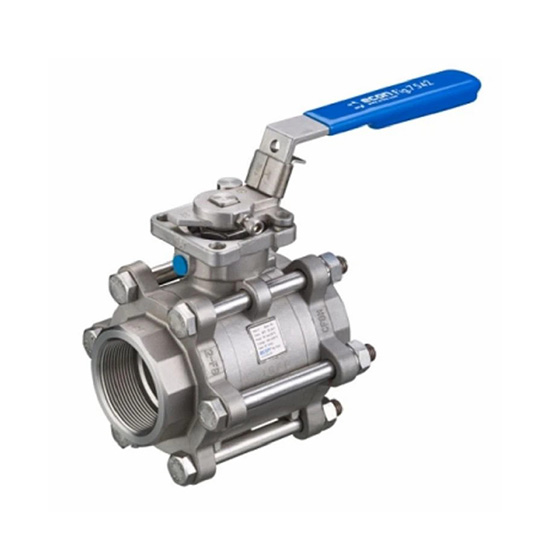
A ball valve uses a rotating sphere with a bored center. You turn the lever or actuator 90°, and the bore either lines up with the pipe (open) or blocks it (closed). Because the sealing surfaces never slide against each other in the way a wedge does, you get repeatable, bubble-tight shutoff even after thousands of cycles. Our forged trunnion mounted ball valve adds a fixed lower trunnion that handles high thrust loads, so it stays tight at ANSI 1500 lb and above.
A gate valve raises and lowers a wedge (gate) perpendicular to the flow. When fully open, the gate retracts completely into the bonnet, leaving an unobstructed, full-bore path. The trade-off is that the wedge must travel a long distance, so operation is slow, and the sliding metal seats wear if you try to throttle. For lines that open once and stay open, that is rarely a problem — and it is exactly why gate valves remain the default for low-cycle isolation.
If your process demands zero leakage to atmosphere or to a downstream system, you should specify a ball valve. Soft- or metal-seated ball designs hold bubble-tight shutoff far more reliably than a wedge gate, especially after long idle periods.
Both valves offer full-bore options, but the ball’s straight-through bore gives you the highest Cv with the least turbulence. Specify a ball valve when pressure conservation drives your pump and energy budget.
For lines you operate daily — batch lines, utility systems, ESD duties — the quarter-turn ball valve wins on seat life. Gate valves are built for “open it and forget it” service, not for repeated strokes.
On large diameters (say 24″ and up), a through-conduit gate valve can be lighter and cheaper than a trunnion ball valve of equal rating. For compact skids and tight manifolds, the ball valve’s smaller envelope is usually the better fit.
Top-entry ball valves let your crew replace seats and seals without cutting the valve out of the pipeline. Most gate valves must be removed for a full service. If your plant targets high asset availability, that difference shows up on the maintenance ledger.
On 2″–8″ class 150/300 lines, a cast steel gate valve is often the lowest-cost ticket. On high-pressure or sour-service lines, a forged API 6D pipeline ball valve is frequently the more economical total-cost choice once you include lifecycle and downtime.
From floating to trunnion, metal-seated to fire-safe, we manufacture ball valves to API 6D, API 608, and ISO 17292 — with mill test reports on every order.
Choose a ball valve when you need any of the following: frequent open/close cycles, bubble-tight isolation, fast emergency shutoff, compact installation, or in-line serviceability. They dominate in oil & gas gathering, chemical dosing, utilities, and any skid where space and reliability matter more than first-cost savings.
Choose a gate valve for large-bore, low-cycle isolation where the line stays open for long stretches — water intake, cooling water, tank farm manifolds, and general utility headers. Our ANSI rising stem wedge gate valve gives you a clear visual open/closed position, and our through conduit gate valve is purpose-built for pipeline pigging where a perfectly straight bore is non-negotiable.
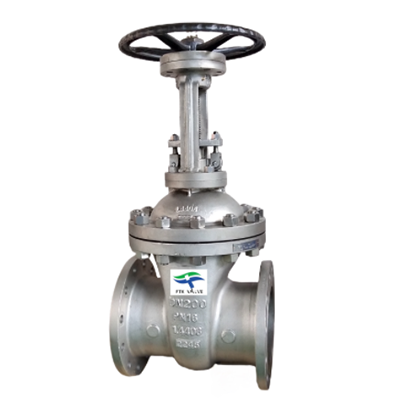
Cast and forged steel gate valves to API 600 / API 602, with rising stem, NRS, parallel slide, and through-conduit options for every pipeline duty.
To keep your specification defensible, anchor it to recognized standards: API 6D (pipeline valves), API 608 (flanged/butt-weld ball valves), API 600 / API 602 (gate valves), ASME B16.34 (pressure–temperature ratings), ISO 17292 (ball valves), and fire-safe API 607 / API 6FA. Specifying to these standards lets your QA team verify dimensions, testing, and traceability instead of trusting a catalog claim.
Full-Think tip: For sour (H2S) or cryogenic service, confirm NACE MR0175/ISO 15156 compliance and the seat/stem material certificate before you release the purchase order — this is where low-cost bids quietly fail audit.
As an ISO 9001 manufacturer since 2012, we have supplied ball and gate valves to oil & gas, chemical, power, and water projects across global markets for over 14 years. Because we hold commonly specified body and trim materials in stock, we can often shorten your lead time versus a pure trading supplier — the same price, higher quality, no middleman. When you total the cost, include the hours your maintenance team spends on a removed-and-repaired gate valve versus an in-line-serviced ball valve; the “cheaper” ticket is not always the cheaper valve.
Send us your line size, pressure class, media, and temperature. We return a matched ball or gate valve specification with full material traceability.
Not recommended. The wedge and seats erode quickly when partially open, which leads to leakage and short service life. For any flow-control duty, specify a globe or control valve instead. Gate valves should stay fully open or fully closed.
Both can be made fire-safe per API 607 / API 6FA, but the ball valve’s secondary metal-seat design gives a more predictable fail-safe shutoff under fire conditions. If fire-safe certification is a project requirement, verify the specific valve’s test report rather than assuming by type.
For abrasive or solids-laden media, a metal-seated ball valve (or a purpose-designed slurry valve) resists wear far better than a gate valve, whose wedge can gag on trapped solids. If you must use a gate valve on dirty service, specify a parallel-slide or wedge with a purge arrangement.
Precision-machined balls, multiple seats, and tighter tolerances raise the manufacturing cost — especially on small sizes. On high-pressure or large-bore lines, however, the lifecycle and reliability advantages frequently make the ball valve the lower total-cost option.
Floating ball valves suit lower pressures and smaller sizes where line pressure seats the ball. Trunnion designs use mechanical support for the ball, so they handle high pressure, large diameters, and high thrust loads without overloading the seats — the right call for most pipeline-class applications.
A rising stem shows valve position at a glance and suits above-ground installation. An NRS gate valve keeps the stem within the bonnet, which is ideal where vertical space is limited (buried or insulated lines) but gives no visual position indicator.
Full-Think Valve Co., Limited is an ISO 9001-certified industrial valve manufacturer established in China in 2012. For more than 14 years we have designed, manufactured, and supplied ball valves, gate valves, globe valves, check valves, plug valves, butterfly valves, and strainers to the oil & gas, petrochemical, power, and water-treatment industries worldwide. All products are built to ANSI, ASME, API, BS/EN, DIN/EN, GB, and GOST standards, with full material traceability and third-party inspection available on request.
(All images are sourced from the internet. In the event of any copyright infringement, please contact us and we will remove the content promptly.)