


When you specify isolation valves for a line that carries flammable media, one decision shapes everything downstream: will the valve still hold its seal if a fire breaks out around it? Two American Petroleum Institute standards answer that question for ball valves, API 607 and API 6FA. They sound alike and they overlap, but they are not the same test. This guide walks you through what each one actually proves, where they diverge, and how to pick the right basis for your specification.
If you have ever compared a datasheet that simply claims “fire safe” against another that cites a specific standard, you already know the term gets used loosely. The goal here is to give you a defensible way to read those claims and to brief your engineering or procurement team without ambiguity.
A fire-safe ball valve is built so that, even after its soft seat has been damaged by heat, the valve can still close and block flow well enough to limit the release of flammable fluid. The threat is simple: in a fire, a polymer seat softens and burns away, so a valve that relied only on that seat would leak. Fire-safe designs add a secondary metal-to-metal sealing path, often with a spring-loaded backup, so the ball can still be forced against a metal seat face after the soft material is gone.
You will see the label on valves serving oil and gas, refining, petrochemical, chemical, and power duties. The expansion of LNG import terminals, hydrogen production and distribution, and offshore energy has quietly raised the bar on what “good enough” means for seated isolation: longer fire exposure, tighter external-leakage limits, and an expectation that the valve still operates after the event, not merely that it stops leaking.
API 607 is the fire-test standard written for soft-seated, quarter-turn valves, with ball valves as its primary subject. Its job is to confirm that a valve keeps its internal sealing performance during and after a fire, so the flammable medium behind it does not pour through the seat while everything around it burns.
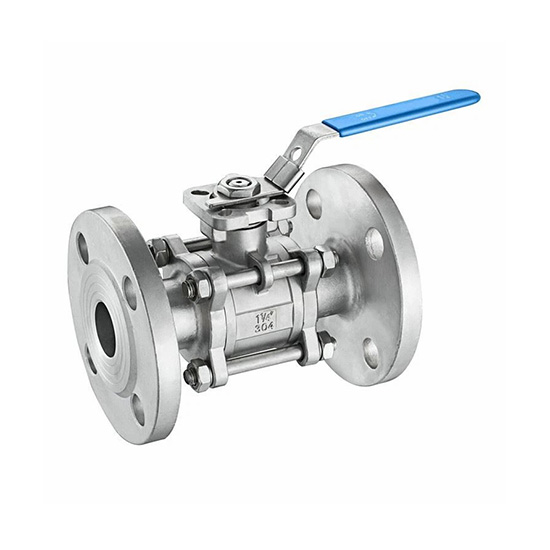
API 6FA covers a broader family of valves, both soft-seated and metal-seated designs, and it is the tighter of the two. Where API 607 looks mainly at internal leakage during fire, API 6FA also judges external leakage and confirms the valve can still be operated after the fire exposure.
That wider scope is why you will find it specified for the most demanding duties: offshore platforms, subsea tiebacks, and high-pressure production where a failed valve is not an option. As deepwater and high-pressure developments have grown, more specifications now call for the 6FA basis by default rather than as an exception.
The shortest honest summary: API 607 proves a soft-seated quarter-turn ball valve limits internal leakage through a 30-minute fire; API 6FA proves a wider range of valve types also controls external leakage and remains operable through a 60-minute fire. If your line sits closer to ignition sources or in high-pressure service, the longer, broader test is the safer basis.
| Feature | API 607 | API 6FA |
|---|---|---|
| Valve scope | Soft-seated quarter-turn ball valves | Soft- and metal-seated valves (broader) |
| Fire duration | 30 minutes | 60 minutes |
| Leakage judged | Internal (seat) leakage | Internal and external leakage |
| Operability after fire | Functional check | Full open/close cycle required |
| Typical duty | General industrial, distribution | Offshore, subsea, high-pressure |
You can read the 60-minute duration and the external-leakage requirement as the industry’s response to harsher operating environments. As plants pack more pressure and more flammable inventory into tighter footprints, specifiers have shifted from “does it stop the seat leaking” to “does the whole valve survive and still operate.”
Start from the service, not the standard. If you are specifying a soft-seated ball valve for moderate-pressure distribution, gas handling, or a standard process skid, API 607 is usually the right and sufficient basis. If the valve sits in high-pressure production, offshore, or any duty where external leakage and post-fire operation matter, specify to API 6FA.
A practical note for you: many metal-seated and trunnion designs that meet API 6FA also satisfy API 607 by extension, because the stricter test already covers the softer-seated case. Choosing 6FA rarely closes doors; it usually just raises assurance. The reverse is not true.
For ball valve platforms built to these bases, review our trunnion mounted ball valve range, the double block and bleed ball valve for positive isolation, and the top entry ball valve for services where in-line maintenance matters.
FULL-THINK is an ISO 9001 valve manufacturer established in 2012, supplying ball, gate, globe, check, plug, and butterfly valves to oil, gas, petrochemical, and power clients worldwide. Tell us your pressure class, temperature, and media, and we will match the right fire-safe basis and configuration.
API 607 is written for soft-seated quarter-turn valves, so ball valves are its main subject, though other quarter-turn types can be evaluated against it. API 6FA explicitly covers a broader set of valve types, including those beyond quarter-turn designs. If you need a fire-safe butterfly or gate valve, check the specific standard cited on the datasheet rather than assuming either label applies.
Yes. A fire test proves one thing: leakage behavior under fire. It says nothing about seat material compatibility with your process fluid, pressure-class rating, temperature range, or cycle life. You still need to match the valve to the media and operating envelope; the fire-safe basis is one requirement among several, not a substitute for a proper specification.
Not exactly a replacement, more an extension. API 6FA is the broader and longer test, and a valve qualified to 6FA typically also meets the intent of 607. But the two are separate standards with different scopes, so a procurement spec should name the one it requires rather than treating them as interchangeable on paper.
A fire-safe qualification rests on a documented fire-test report from a recognised laboratory. Whether that report must come from an independent third party depends on your project, your client, and any contractual or regional requirements. For high-risk or exported packages, buyers increasingly ask for third-party test evidence rather than a manufacturer’s self-declaration, so it is worth clarifying early.
Reports list the test duration, the flame temperature band, the pressure used, and the measured leakage in defined units (often a leakage rate or a bubble count for internal seat leakage, plus any external leakage observed). The key is to compare those numbers against the limit stated in the relevant standard edition. A lower measured leakage than the limit is good; a number near the limit deserves a conversation with the supplier about your actual duty.
Yes. ISO 10497 is the widely referenced international fire-test standard for valves, and it is frequently cited alongside or in place of the API tests, especially in projects governed by ISO or EN frameworks. If your line is built to international or European specifications, confirm whether the contract calls for API, ISO 10497, or both, so the qualification you receive matches the requirement.
The fire-safe performance comes from the design and the qualified seat arrangement, so it does not “expire” in service, but it only holds if the valve is installed and maintained as specified. Using the correct stem packing, avoiding modifications to the seat configuration, and following the manufacturer’s inspection interval all protect the qualification. Document the as-installed basis so later teams know what was qualified.
All images are sourced from the internet. In the event of any copyright infringement, please contact us and we will remove the content promptly.
 Optimized by Seraphinite Accelerator