


In the diverse world of flow control, certain valves are engineered for general service, while others are built to endure the most demanding environments. The Plug Valve falls firmly into the latter category. As a professional industrial valve manufacturer established in 2012, FTK has seen a growing demand for plug valves in sectors where standard ball valves might fail due to erosion or high solids content.
Choosing the right valve supplier involves understanding the nuances between different rotary valve types. This guide explores the mechanics, advantages, and specific applications of plug valves in modern pipeline infrastructure.
The plug valve is one of the oldest and most reliable valve designs in existence. At its core, it features a tapered or cylindrical “plug” with a hollow passage. Since 2012, FTK has refined this classic design using advanced metallurgy and precision machining, ensuring that our plug valves meet the high-pressure and high-temperature requirements of today’s oil, gas, and chemical industries.
The operation of a plug valve is elegantly simple. It is a quarter-turn valve, meaning a 90-degree rotation of the handle or actuator fully opens or closes the valve.
When the valve is in the open position, the passage in the plug aligns with the inlet and outlet ports of the valve body. To close the valve, the plug is rotated so that the solid part of the plug blocks the flow.
Tapered Plugs: These are the most common. The wedge shape allows for a tighter seal and makes it easier to “seat” the plug into the valve body.
Cylindrical Plugs: Used in specific high-flow applications where a constant diameter is preferred to minimize turbulence.
As a leading valve manufacturer, FTK provides two distinct configurations depending on the media being transported:
These valves use a lubricant (sealant) injected between the plug and the body under pressure. This lubricant serves two purposes: it reduces friction during operation and fills any microscopic gaps to ensure a bubble-tight seal. These are ideal for abrasive media where traditional seals might wear quickly.
Explore our robust Lubricated Plug Valve series for high-pressure oil and gas applications.
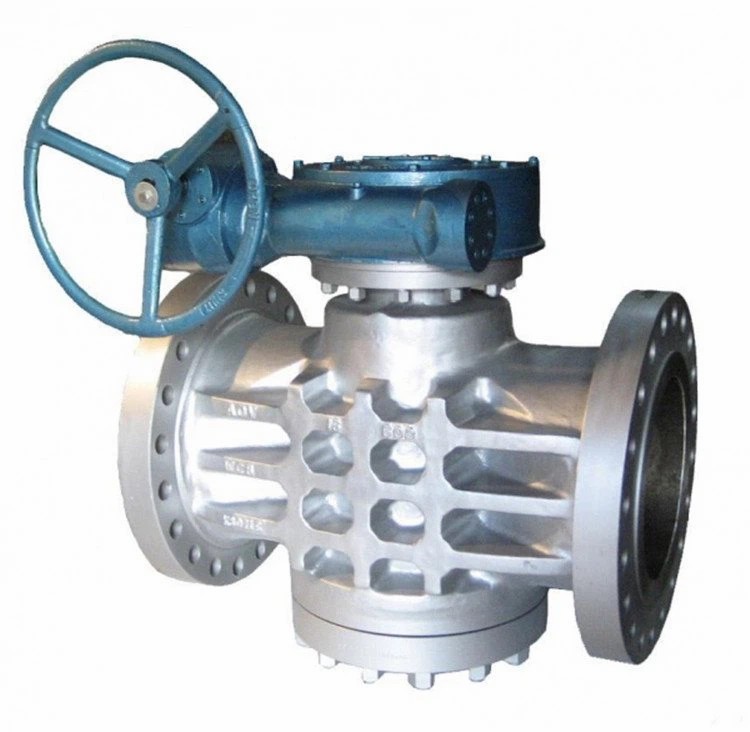
(All images are sourced from the internet. In the event of any copyright infringement, please contact us and we will remove the content promptly.)
These valves utilize a non-metallic sleeve (often PTFE) or a liner inserted into the body. The sleeve reduces the torque required to turn the valve and eliminates the need for manual lubrication. This design is widely used in chemical processing where media purity is paramount.
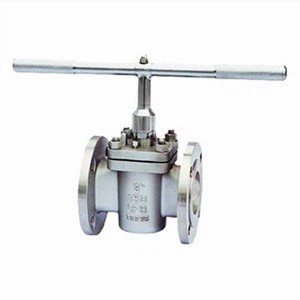
(All images are sourced from the internet. In the event of any copyright infringement, please contact us and we will remove the content promptly.)
A common question we receive as a valve supplier is: “Why choose a plug valve over a ball valve?” While they look similar, their performance in “dirty” service is vastly different.
Sealing Area: Plug valves have a much larger sealing surface area compared to ball valves. This makes them significantly more durable in high-vibration or erosive environments.
No Cavities: Standard ball valves have a cavity between the ball and the body where media can get trapped. Plug valves eliminate this cavity, preventing product contamination and “dead zones.”
Solids Handling: The “wiping” action of the plug as it rotates helps clear away debris or scale from the seating surface, making it superior for slurries.
The flow efficiency of a plug valve is largely dictated by its port shape. FTK offers three primary designs:
Rectangular Port: The most common, offering a balance between flow capacity and structural integrity.
Round Port: Provides the least resistance to flow and is ideal for pigging operations.
Diamond Port: Specifically designed for throttling service, allowing for more precise flow control at lower opening percentages.
Since our founding in 2012, FTK has engineered plug valves to excel where others fail:
High Temperature: Our metal-to-metal seated lubricated designs can handle extreme thermal cycles.
Corrosion Resistance: Available in Duplex Stainless Steel and Alloy 20 for aggressive chemical service.
Rapid Operation: The quarter-turn nature allows for quick emergency shutdowns (ESD).
| Feature | Lubricated Plug Valve | Non-Lubricated (Sleeved) |
| Sealing Method | Metal-to-Metal + Sealant | PTFE/PFA Sleeve |
| Maintenance | Requires regular lubrication | Maintenance-Free |
| Media Type | Abrasive Slurries, High Temp | Chemicals, Pure Fluids |
| Torque | High (Reduced by sealant) | Lower |
| Cavity-Free | Yes | Yes |
| Service Life | Extremely long in erosive service | High in corrosive service |
A plug valve is only as good as the precision of its taper. At FTK, we utilize CNC grinding to ensure a perfect fit between the plug and the body. Whether we are using Carbon Steel (A216 WCB) or Stainless Steel (A351 CF8M), our commitment to quality has been the cornerstone of our identity since 2012.
Q1: What is the main advantage of a plug valve over a ball valve? Plug valves have a larger sealing surface and no internal cavities, making them superior for handling slurries and preventing trapped media.
Q2: Do all plug valves require manual lubrication? No, non-lubricated plug valves use a PTFE or elastomeric sleeve to provide a low-friction seal without the need for periodic lubrication.
Q3: Can plug valves be used for throttling applications? While primarily used for on/off service, plug valves with diamond-shaped ports can be used for moderate throttling and flow control.
Q4: How does FTK ensure a tight seal in high-pressure systems? Since 2012, FTK has used precision-tapered plug designs and high-grade sealants or sleeves to ensure a bubble-tight seal that meets API standards.
The plug valve remains an indispensable tool for engineers facing the challenges of erosive, corrosive, or high-solids media. Its robust design and “cavity-free” nature provide a level of reliability that few other valve types can match.
As a professional industrial valve manufacturer since 2012, FTK is dedicated to providing high-performance rotary solutions. Whether you are managing a chemical plant or an offshore oil platform, choosing FTK as your valve supplier ensures you receive hardware that is engineered for the toughest conditions on earth.Explore our full technical catalog at FTK Professional Valve Collection
 Optimized by Seraphinite Accelerator