


In the sophisticated world of fluid handling, selecting the wrong valve type can lead to premature system failure, increased energy costs, and safety hazards. While they may look similar from the outside, Gate Valves and Globe Valves serve fundamentally different purposes.
Since its establishment in 2012, FTK has operated as a leading industrial valve manufacturer, perfecting the design of both multi-turn valve types to meet the rigorous standards of the oil, gas, and water sectors. As a professional valve supplier, we believe that transparency regarding the strengths and limitations of each design is the key to a successful long-term partnership.
Both gate and globe valves are “multi-turn” valves, meaning they require multiple rotations of the handwheel to move from fully open to fully closed. This characteristic allows for slow operation, which is critical for preventing water hammer in large-diameter pipelines. However, this is where their similarities end.
The gate valve is the most common valve in industrial piping. It uses a flat or wedge-shaped gate that slides up and down to open or close the flow.
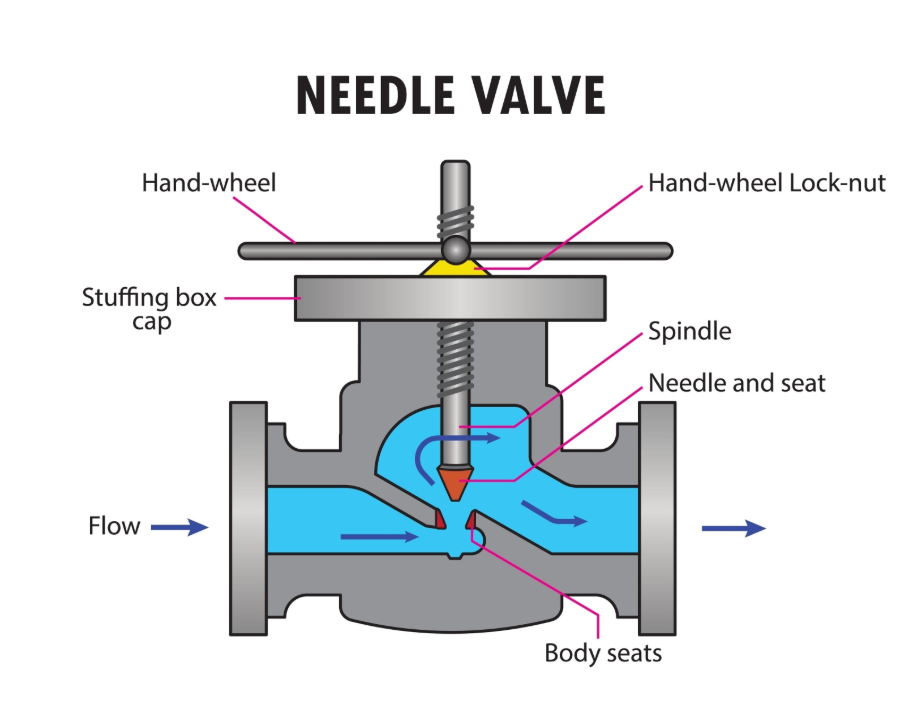
Unlike the straight-through path of a gate valve, a globe valve forces the fluid to change direction twice (an S-shaped path) as it passes through the valve body.
In a Gate Valve, the “Resistance Coefficient” is minimal, which is why it is the preferred choice for long-distance transport pipelines where maintaining pressure is vital.
In contrast, a Globe Valve is intentionally restrictive. This resistance is what provides the control needed for cooling systems or chemical injection lines. Since 2012, FTK has optimized the internal contours of our globe valve bodies to reduce unnecessary turbulence while maintaining high-precision control.
| Feature | Gate Valves | Globe Valves |
| Primary Function | On/Off Isolation | Flow Regulation (Throttling) |
| Flow Path | Straight-through | S-shaped (Tortuous) |
| Pressure Drop | Very Low | High |
| Flow Direction | Bi-directional | Uni-directional |
| Seat Wear | High (during operation) | Low (minimal contact friction) |
| Operation Speed | Very Slow | Moderate |
| Best For | Main Isolation Lines | Bypass lines, Fuel systems |
(All images are sourced from the internet. In the event of any copyright infringement, please contact us and we will remove the content promptly.)
Maintenance is where the “Cons” of a valve truly manifest.
Q1: Can I use a gate valve for minimal throttling? No. Even slightly opening a gate valve will cause “wire-drawing” (erosion) across the bottom of the gate, which will prevent the valve from ever achieving a tight seal again.
Q2: Why are globe valves more expensive than gate valves? Globe valves require more complex internal casting and more robust stem/disc materials to handle the higher torque and flow resistance.
Q3: Which valve is better for high-temperature steam? Generally, a globe valve is preferred for steam service because it handles the expansion and contraction of thermal cycles better and provides the necessary control for steam flow.
Q4: How does FTK ensure the quality of these traditional valves? Since our founding in 2012, every gate and globe valve undergoes rigorous pressure testing according to API 598 to ensure zero leakage before shipping.
There is no “perfect” valve—only the right valve for the specific application. A gate valve is the king of efficiency for isolation, while the globe valve is the master of precision for regulation. Understanding these trade-offs is what separates a standard procurement process from a high-performance engineering strategy.
As a dedicated industrial valve manufacturer since 2012, FTK remains committed to providing technical clarity alongside high-quality hardware. Whether you are designing a new desalination plant or upgrading a refinery, choosing FTK as your valve supplier means you have access to a decade of expertise in Gate Valves, Globe Valves, and beyond.
Explore our full range of flow control solutions at FTK Products.
 Optimized by Seraphinite Accelerator