When choosing a check valve for your system, understanding the differences between a dual plate check valve and a swing check valve can help you make an informed decision. Both valves are used for backflow prevention, but they have distinct designs and are suitable for different applications. In this blog, we’ll compare the two types of check valves and help you choose the best one for your needs.
What Are Dual Plate Check Valves and Swing Check Valves?
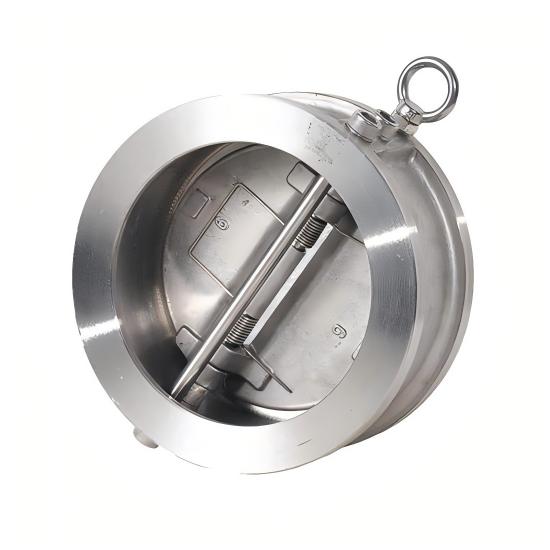
Dual Plate Check Valve
A dual plate check valve features two hinged plates that open and close automatically to prevent backflow. The plates pivot and allow the flow to pass in one direction. These valves are compact, lightweight, and suitable for high-flow applications. They are commonly used in piping systems for water, oil, and gas.
(All images are sourced from the internet. In the event of any copyright infringement, please contact us and we will remove the content promptly.)
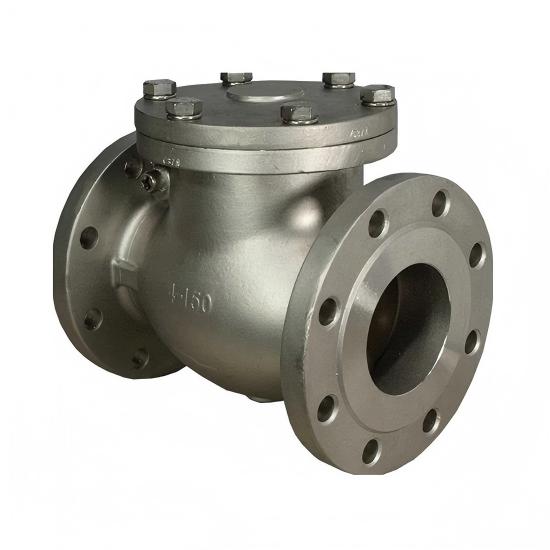
Swing Check Valve
A swing check valve has a single disc that swings on a hinge to open or close the flow path. When the flow stops or reverses, the disc swings back to block the flow. Swing check valves are larger and more robust than dual plate check valves and are typically used in low-flow systems or applications where space isn’t a concern.
(All images are sourced from the internet. In the event of any copyright infringement, please contact us and we will remove the content promptly.)
Key Differences Between Dual Plate Check Valve and Swing Check Valve
Feature
Dual Plate Check Valve
Swing Check Valve
Design
Two plates hinged together
One disc that swings on a hinge
Size
Compact and lightweight
Larger and heavier
Flow Efficiency
Suitable for high-flow applications
Better for low-flow or low-pressure systems
Installation
Easier to install in tight spaces
Requires more space for installation
Backflow Prevention
Fast response to backflow
Slower response to backflow
Maintenance
Requires less maintenance
Requires more maintenance due to larger parts
Advantages of Dual Plate Check Valves
Compact Design: Dual plate check valves are smaller and lighter, making them ideal for installation in tight spaces.
Fast Response: The two plates close quickly, providing rapid backflow prevention.
High Flow Capability: Suitable for high-flow systems where quick shut-off is needed.
Low Maintenance: Due to their simple design, dual plate check valves are easy to maintain.
Advantages of Swing Check Valves
Reliable for Low-Flow Systems: Swing check valves are better suited for systems with low flow or pressure.
Robust Construction: These valves are durable and suitable for heavy-duty applications.
Longer Lifespan: Swing check valves are designed to handle higher stresses, which can lead to a longer lifespan in certain applications.
When to Use a Dual Plate Check Valve and Swing Check Valve
Dual Plate Check Valve: Ideal for high-flow systems, compact installations, and applications that require quick response times, such as water treatment, oil and gas, and fire protection systems.
Swing Check Valve: Best suited for low-flow systems or applications with limited space where robust construction and durability are critical, such as in HVAC systems or drainage systems.
Applications of Dual Plate Check Valves and Swing Check Valves
Dual Plate Check Valves
Water Systems: Used to prevent backflow in water pipelines and municipal water systems.
Oil and Gas: Common in pipelines and oil transfer systems, where high flow rates are involved.
HVAC Systems: Used to control backflow in heating and cooling systems.
Swing Check Valves
Drainage Systems: Used for controlling backflow in low-pressure drainage lines.
Pumping Systems: Installed in pumps to prevent reverse flow and protect equipment.
Wastewater Treatment: Used in sewage systems to prevent backflow into treatment tanks.
Dual Plate Check Valve Installation and Maintenance
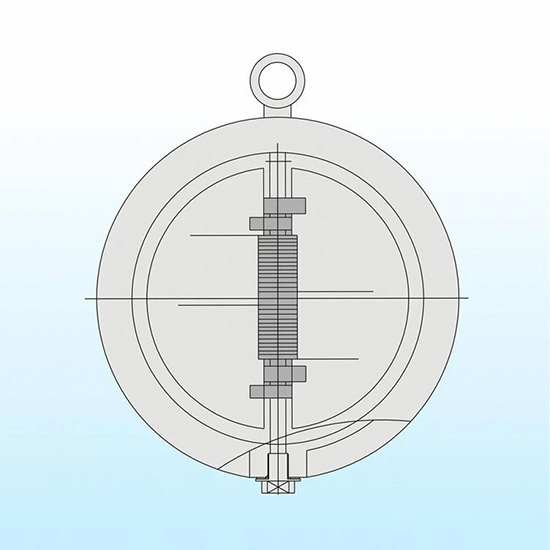
Installation: Dual plate check valves are easy to install in compact spaces and can be installed in either horizontal or vertical orientations.
Maintenance: These valves require minimal maintenance. Regular checks are advised to ensure the plates are not obstructed and can move freely.
(All images are sourced from the internet. In the event of any copyright infringement, please contact us and we will remove the content promptly.)
Swing Check Valve Installation and Maintenance
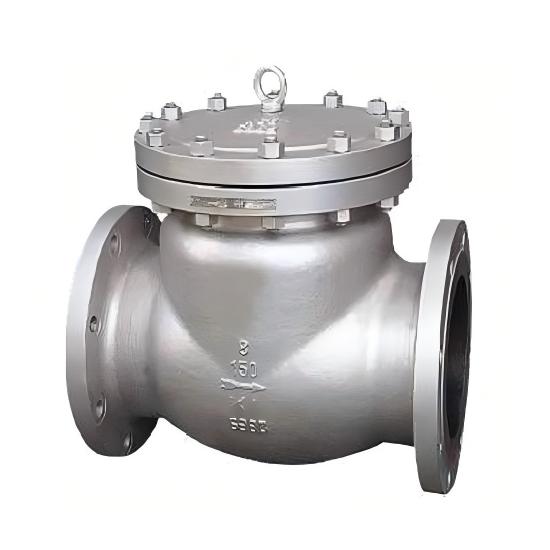
Installation: Swing check valves need more space and should be installed in a position where the disc can swing freely without obstruction.
Maintenance: Swing check valves require more maintenance due to their larger components. Regular checks are essential to ensure the valve’s disc moves properly and is free from debris.
(All images are sourced from the internet. In the event of any copyright infringement, please contact us and we will remove the content promptly.)
FAQs
Q:What is the main difference between a dual plate check valve and a swing check valve?
A dual plate check valve has two hinged plates for faster response and is more compact, while a swing check valve has a single disc that swings to prevent backflow and is typically larger and more robust.
Q:Which is better for backflow prevention: dual plate check valve or swing check valve?
Both valves are effective for backflow prevention, but dual plate check valves offer faster response times and are better for high-flow systems. Swing check valves are more suited for low-flow or low-pressure applications.
Q:Can I use a dual plate check valve in a low-flow system?
While dual plate check valves are primarily designed for high-flow systems, they can be used in low-flow systems if the pressure conditions are adequate.
Q:How do I choose between a dual plate check valve and a swing check valve for my system?
Consider the flow rate, pressure conditions, and available space. Dual plate check valves are better for high-flow, compact applications, while swing check valves are more durable and suitable for low-flow systems.
Conclusion
Choosing between a dual plate check valve and a swing check valve depends on your specific needs. If you need a compact, high-flow valve with quick backflow prevention, a dual plate check valve is your best option. For low-flow systems or applications that require heavy-duty durability, a swing check valve is a better fit. At FULL-THINK VALVE, we offer high-quality check valves tailored to your needs.
Contact us today for more information on our range of dual plate check valves and swing check valves.



 Optimized by Seraphinite Accelerator