


If you specify isolation valves for oil and gas, petrochemical, or pipeline service, you have almost certainly come across the term DBB ball valve. But what actually makes a ball valve “double block and bleed,” and when should you specify one instead of a standard valve? In this guide, written by the engineering team at Full-Think — an ISO 9001 valve manufacturer producing API 6D ball valves since 2012 — we walk you through the design, working principle, how DBB differs from DIB, where it is used, and how to select the right unit for your process.
A DBB ball valve — short for double block and bleed valve — is a single valve body that gives you two independent sealing surfaces (the “blocks”) between the upstream and downstream sides, plus a bleed (vent) connection located in the cavity between those two seals. Per API 6D, a DBB arrangement uses one or more obturators to block flow from both directions and includes a way to vent the trapped cavity.
In plain terms: you can close the valve, open the bleed port, and confirm that no upstream or downstream fluid remains in the body cavity. That single capability is why a ball valve with DBB functionality is trusted for isolation points where safety and positive shutoff matter more than cost.
Whether the valve is floating or trunnion-mounted, the core parts are the same. Understanding them helps you judge why a trunnion mounted ball valve often carries the DBB label in larger sizes:
The cross-section below shows how the ball, dual seats, and stem sit inside a two-piece cast steel body — the same layout a DBB ball valve uses, just with the added bleed connection.

Figure 1 — Cutaway view of a floating ball valve: ball, dual seats, and stem.
The operating sequence is what separates a DBB ball valve from a simple shutoff valve. With the floating ball valve closed:
In a double block and bleed ball valve the two seats are typically arranged so each blocks flow from its own direction. This means you get positive isolation even if one seat leaks — the second seat still holds, and the bleed tells you the truth. That property is exactly why DBB valves sit at critical isolation points in pipelines and skids.
Not sure which seat arrangement your service needs?
Our engineers can review your line list and recommend the right DBB configuration — floating or trunnion, soft or metal seated — with full API 6D documentation.
Buyers often confuse DBB (double block and bleed) with DIB (double isolation and bleed). The bleed is the same; the difference is how the two seats block flow. This is governed by SPE and DPE seating in API 6D ball valves (single vs double piston effect).
| Feature | DBB (Double Block & Bleed) | DIB (Double Isolation & Bleed) |
|---|---|---|
| Sealing direction | Each seat blocks one direction (typically SPE) | Both seats block both directions (DPE) |
| Cavity bleed | Yes | Yes |
| Best for | Isolation + safe venting of trapped fluid | Double isolation where backflow is possible |
| Common use | Meter skids, isolation, maintenance breaks | Subsea, high-integrity isolation |
Rule of thumb: if you need to confirm and vent the trapped cavity, specify DBB. If you need both seats to hold against pressure from either side, specify DIB.
Because a double block and bleed ball valve delivers verified isolation in one compact body, you will find it across safety-critical and high-value services:
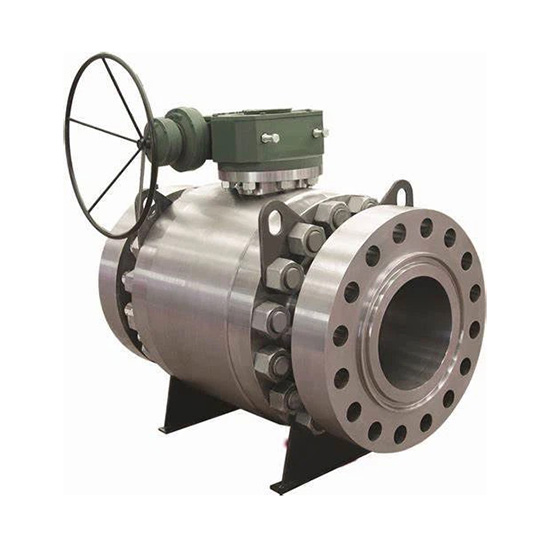
Figure 2 — An API 6D pipeline ball valve, a typical DBB configuration for transmission lines.
For larger bore and higher pressure, a forged trunnion mounted ball valve gives you the mechanical support the DBB seat load demands.
Use the checklist below so you never over- or under-specify. Each factor maps to a concrete choice:
Clean gas or liquid → soft seated. Slurry, coking, or solids → metal seated. See our guide on ball valve seat materials for temperature limits.
Below ~200°C with moderate pressure, a floating design works. Above DN200 or Class 600, move to trunnion-mounted for seat-load control.
Flanged, welded, or threaded each change installation and maintenance. Our valve end connections guide compares them in detail.
Forged bodies suit high-pressure and cyclic service; cast bodies suit general duty. The cast vs forged steel comparison helps you decide.
Specify fire-safe and anti-static (API 607 / API 6FA) and confirm API 6D compliance for pipeline duty. The API 607 vs API 6FA difference matters for fire risk.
Answer four questions for a preliminary recommendation. This is a starting point only — confirm the final spec with our engineering team.
Ready to specify your DBB ball valve?
Send us your line list and service conditions. We return a matched specification with API 6D documentation and a competitive quote — usually within two working days.
A single DBB ball valve provides both blocks and the bleed in one body, replacing the traditional “double valve plus spool piece” arrangement. You only need two separate valves if your standard valves are not DBB-rated and you must achieve isolation by cascading them.
The bleed port vents the body cavity after the valve is closed, letting you verify both seats are sealing and safely release trapped pressure or product before opening the valve for maintenance.
DBB ball valves span from Class 150 up to Class 2500 and beyond for special projects. Floating designs typically cover the lower classes; trunnion-mounted designs are used for the higher pressure classes and larger bores.
Yes — most DBB ball valves for hydrocarbon service are built to API 607 / API 6FA with fire-safe seats, graphite seals, and anti-static stems. Fire-safe compliance is a standard line-item you should confirm on the data sheet.
Factory testing follows API 598 (shell, seat, and backseat tests). On site, the practical check is to close the valve and open the bleed: no continuous flow from the bleed confirms both seats are holding.
For standard duty, RPTFE and PEEK cover roughly −46°C to 200°C. For abrasive, coking, or high-temperature service, metal seats (Stellite or tungsten carbide) are the right choice even though they cost more.
A one-body DBB valve saves space, weight, and leak paths, which is why it is preferred on skids and offshore modules. A two-valve assembly is only chosen when neither single valve is DBB-rated or when very large bore makes a single DBB body impractical.
Yes. Cryogenic DBB ball valves use extended bonnets, spring-loaded seats, and low-temperature body materials (e.g., LF2 or stainless) to keep the stem packing above the cold zone. Specify the design temperature on your inquiry.
Typical ranges run from 1/2″ up to 60″ and larger for pipeline projects. Floating DBB valves dominate the smaller end; trunnion-mounted DBB valves take over from roughly DN200 upward.
Choose metal seats when media is abrasive, contains solids, coke, or steam, or when continuous temperature exceeds the soft-seat limit (about 200°C). Metal seats trade a slightly lower leak rate class for far longer life in harsh service.
This article was prepared by the engineering team at Full-Think (FULL-THINK VALVE CO., LTD), an ISO 9001-certified valve manufacturer producing ball, gate, globe, check, plug, and butterfly valves since 2012, with products supplied to pipeline, refining, and utility projects worldwide.
(All images are sourced from the internet. In the event of any copyright infringement, please contact us and we will remove the content promptly.)
 Optimized by Seraphinite Accelerator