

In the modern industrial landscape, ensuring a perfect seal is not just about performance—it is about safety, environmental responsibility, and long-term cost-efficiency. As a leading industrial valve manufacturer, FTK understands that preventing stem leakage is a top priority for engineers and operators worldwide. When it comes to preventing these leaks, two primary technologies dominate the market: Bellows Seal and Packing Seal.
Understanding the fundamental differences between these two can help procurement managers choose the right components for their specific infrastructure. For global industries handling hazardous or high-temperature media, partnering with a reliable valve supplier to select the appropriate sealing technology can be the difference between a seamless operation and a catastrophic system failure.
A packing seal is the most common and historically prevalent method for sealing valve stems. It involves using a stuffing box filled with fibrous or elastomeric material (packing) that is compressed around the stem to create a barrier.
The packing material—often made of high-purity graphite, PTFE, or synthetic fibers—is compressed by a component called the “gland follower.” This compression forces the packing to expand radially against both the valve stem and the stuffing box wall.
By design, a packing seal is a “dynamic” seal. Because the stem moves through the packing, there is constant friction. Over time, this friction wears down the packing material, leading to a loss of compression. In many non-critical applications, a small amount of leakage is tolerated, but in high-pressure or toxic environments, this “controlled leakage” becomes a major liability that requires constant manual adjustment.
A bellows seal uses a flexible, accordion-like metal tube (the bellows) that is welded to the valve stem at one end and the valve bonnet at the other. This creates a permanent, hermetic metallic barrier that moves in unison with the stem.
The bellows is typically manufactured through sophisticated welding or hydraulic forming. For industrial globe valves, multi-ply formed bellows are the gold standard, providing a balance of flexibility for thousands of cycles and high-pressure resistance.
Unlike packing, which inherently has a microscopic gap between the stem and the material, a bellows seal is a solid metal wall. There is no path of least resistance for the media to escape. This is why it is often referred to as a “Zero Leakage” or “Emission-Free” valve, essential for modern environmental compliance.
To assist in your selection process, the following table highlights the core differences between these two sealing methods:
| Feature | Packing Seal | Bellows Seal |
| Leakage Risk | Periodic leakage as material wears | Zero (Hermetically Sealed) |
| Maintenance Frequency | High (Regular tightening required) | Maintenance-Free (until end of life) |
| Fugitive Emissions | High risk of VOC emissions | Completely Prevented |
| Operational Friction | Significant (Requires more torque) | Minimal (Smooth movement) |
| Primary Media | Steam, Water, General Gas | Toxic, Flammable, Thermal Oil, Vacuum |
| Initial Cost | Lower | Higher |
| Long-term TCO | Higher due to labor/leakage loss | Lower due to zero maintenance |
As a professional valve manufacturer with 14 years of experience, FTK has optimized the bellows design to meet the most rigorous international standards. Our bellows sealed globe valves offer a “Dual-Seal” design, incorporating a secondary packing seal as a backup for maximum safety.
At FTK, we understand that the bellows is the heart of the valve. We use high-grade materials such as SS316L, Inconel 625, or Hastelloy to ensure resistance against chemical corrosion and mechanical fatigue.
For American Standard Projects: The ANSI Bellow Sealed Globe Valve is the preferred choice for US-based chemical and refinery projects, ensuring compliance with strict EPA fugitive emission standards.
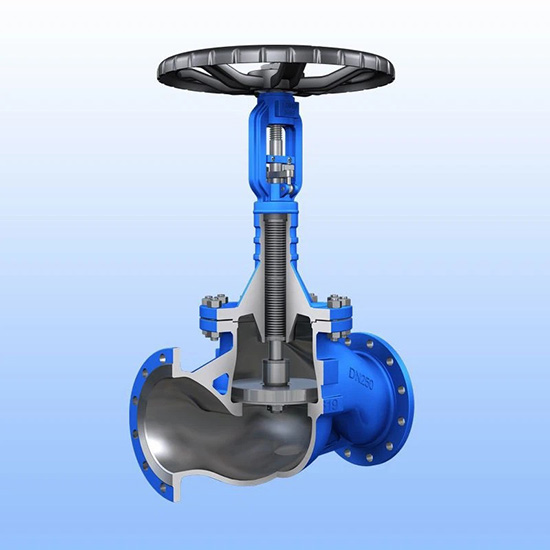
(All images are sourced from the internet. In the event of any copyright infringement, please contact us and we will remove the content promptly.)
For European Standard Projects: The DIN Cast Steel Globe Valve with Bellow is engineered for the precise requirements of European thermal oil systems and high-vacuum applications.
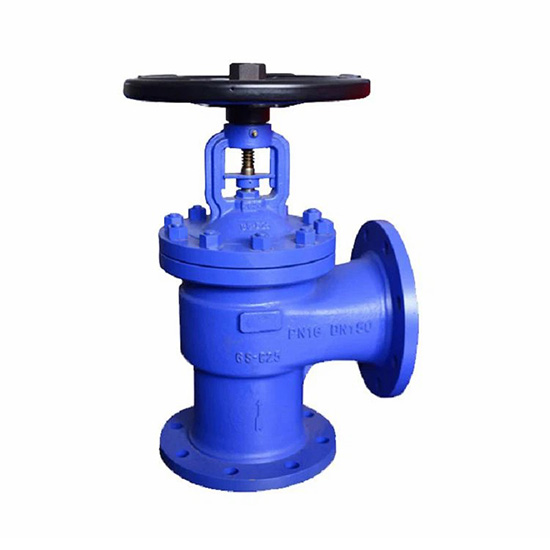
(All images are sourced from the internet. In the event of any copyright infringement, please contact us and we will remove the content promptly.)
One of the most critical aspects of Bellows Seal valves is their Cycle Life. Unlike packing, which simply gets tighter or looser, a metal bellows has a finite number of times it can expand and contract before the metal fatigues.
The lifespan is determined by working pressure, stroke length, and media temperature. FTK valves are engineered with optimized bellows lengths to ensure the metal remains within its elastic limit, significantly extending the service life compared to generic alternatives.
Many of our high-end bellows valves come equipped with a Monitoring Port (tell-tale hole). This allows maintenance teams to detect any bellows failure immediately using sensors, without any media escaping into the atmosphere, thanks to the backup packing seal.
While packing seals are sufficient for general water or air lines, a bellows seal is a “must-have” in the following sectors:
Thermal Oil Systems: Heat transfer fluids easily leak through traditional packing, creating fire hazards.
Toxic and Lethal Gas: In chlorine or phosgene service, the hermetic seal of a bellows valve is the only safety-compliant option.
High-Vacuum Service: Preventing atmospheric air from entering the system is critical in semiconductor manufacturing.
B2B procurement often focuses on the “Price Per Unit,” but the “Total Cost of Ownership” tells a different story.
A packing seal valve may require maintenance every few months. This involves labor costs, replacement packing, and potential system downtime. An FTK Bellows Seal valve is designed for maintenance-free operation for years, allowing your technical team to focus on more critical tasks.
In industries handling expensive chemicals or high-pressure steam, “leakage cost” adds up. By eliminating stem leakage, a bellows seal valve often pays for its price difference within the first 18 months of operation.
Q1: What is the primary difference between a bellows seal and a packing seal? A bellows seal provides a permanent, hermetic metal barrier for zero leakage, while a packing seal relies on compressed friction and may allow minor leakage over time.
Q2: Which valve type is better for handling toxic or hazardous media? Bellows sealed valves are the industry standard for hazardous media because their welded metallic construction completely eliminates the risk of fugitive emissions.
Q3: Does a bellows seal globe valve require regular maintenance? No, unlike packing seals that need periodic tightening, a bellows seal is designed for maintenance-free operation throughout its rated cycle life.
Q4: Is the initial higher cost of a bellows seal valve worth the investment? Yes, the investment is recovered through significant savings in maintenance labor, reduced downtime, and the prevention of expensive media loss
While the initial cost of a bellows sealed valve is higher, its ability to provide zero-leakage performance, environmental compliance, and maintenance-free operation makes it the superior choice for modern industrial systems.
Choosing FTK as your valve manufacturer means investing in 14 years of manufacturing heritage combined with cutting-edge sealing technology. As a dedicated industrial valve supplier, we offer a comprehensive supply chain capable of delivering high-quality, API-certified solutions to the water, oil, and gas sectors worldwide.
Whether you need an ANSI Bellow Sealed Globe Valve for a refinery or a DIN Cast Steel Globe Valve with Bellow for a thermal oil plant, our engineering team is ready to provide a solution that maximizes your pipeline’s safety and efficiency.
Explore our full range of professional flow control solutions at our Globe Valves collection.