

In the high-stakes world of oil and gas transportation, the difference between a successful operation and a catastrophic failure often comes down to a single set of specifications: API 6D. As the “gold standard” for pipeline valves, API 6D governs the design, manufacturing, and testing of valves that must withstand extreme pressures and environmental conditions.
Since its establishment in 2012, FTK has operated as a professional valves manufacturer, integrating these rigorous standards into every stage of production. For project engineers and procurement managers, choosing an API 6D ball valve is not just a regulatory requirement—it is a commitment to infrastructure longevity and environmental safety.
The American Petroleum Institute (API) Specification 6D is the primary standard for valves used in pipeline transportation systems. While other standards like API 600 or API 608 focus on refinery or general process service, API 6D specifically addresses the needs of midstream infrastructure, such as long-distance oil and natural gas pipelines.
As a leading valves supplier, FTK ensures that all our api 6d ball valves meet these specific requirements for wall thickness, face-to-face dimensions, and material traceability, providing a robust solution for the world’s most demanding energy corridors.
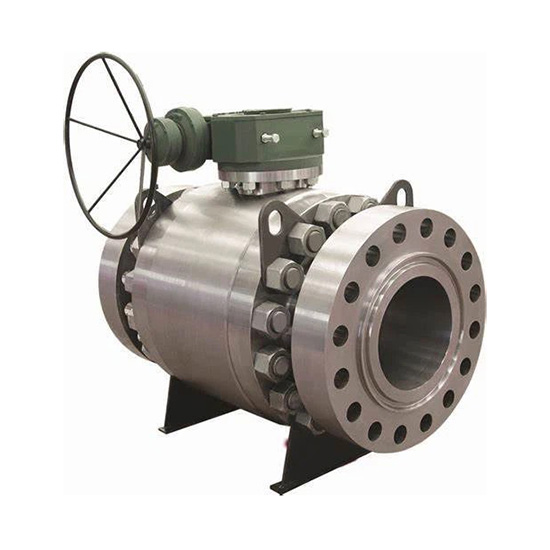
Many buyers ask why they should prioritize an api 6d ball valve over a standard industrial model. The answer lies in the specialized features mandated by the specification:
To be classified as an api 6d ball valve, the internal engineering must follow strict geometric and mechanical rules. FTK specializes in two primary configurations under this scope:
For high-pressure pipeline service, the Trunnion Mounted Ball Valve is the industry standard. The ball is anchored by a trunnion, which absorbs the pressure load, reducing the torque required to operate the valve and preventing seat deformation.
API 6D valves are designed to provide a smooth, unobstructed flow path. This “through-conduit” design minimizes pressure drop and turbulence, which directly translates to lower pumping costs for the pipeline operator.
As a certified valves manufacturer since 2012, FTK maintains a world-class testing facility to execute the mandatory and optional tests required by api 6d:
Pipeline media often contains corrosive elements like H2S (sour gas). As a global valves supplier, FTK offers api 6d compliant valves that also meet NACE MR0175/ISO 15156 standards. This involves using specialized alloys and heat-treatment processes to prevent sulfide stress cracking, ensuring the valve survives in sour service environments.
| Feature | API 6D Ball Valve | Standard Industrial Ball Valve |
| Main Application | Midstream Pipeline (Oil/Gas) | Downstream Refinery / Utilities |
| Bore Type | Full Bore (Pigging compatible) | Often Reduced Bore |
| Sealing Feature | DBB / DIB Capability | Single Sealing Point |
| Testing Standard | API 6D (More Rigorous) | API 598 / EN 12266 |
| Documentation | Full Material Traceability (MTRs) | Basic Compliance |
| Service Life | Long-term (20+ Years) | Moderate |
Quality control is not just about the final product; it’s about the process. Since 2012, FTK has implemented a “Zero-Defect” philosophy. Every api 6d valve we produce undergoes ultrasonic testing (UT) or radiographic testing (RT) of the pressure-containing parts to ensure there are no internal casting flaws. When you purchase from an experienced valves manufacturer, you are buying the assurance that your high-pressure assets are protected.
Q1: What does “Monogrammed” mean in API 6D? An API 6D Monogram is a mark applied to the valve nameplate that certifies the valves manufacturer has been audited and found to follow the strict quality management system required by API.
Q2: Is an API 6D ball valve bi-directional? Most are, but it depends on the seat design (Single Piston Effect vs. Double Piston Effect). Always check the manufacturer’s data sheet for flow direction requirements.
Q3: Can FTK provide customized face-to-face dimensions for API 6D valves? While API 6D has standard dimensions, as a flexible valves supplier, we can manufacture custom lengths to replace legacy valves in existing pipelines while maintaining internal standard compliance.
Q4: Why is “Through-Conduit” important for natural gas? It prevents the accumulation of liquid “slugs” or debris in the valve body, which is critical for maintaining gas purity and preventing internal corrosion.
The API 6D specification is more than a list of dimensions; it is a blueprint for industrial safety. Whether you are installing a Trunnion Mounted Ball Valve in a cross-country pipeline or selecting Check Valves for a pumping station, compliance is your best defense against downtime and environmental damage.
Since its founding in 2012, FTK has remained a steadfast valves manufacturer dedicated to the highest levels of certification. By partnering with a knowledgeable valves supplier, you ensure that your projects are backed by engineering excellence and a decade of experience in api 6d global distribution.
Explore our full range of certified solutions at FTK Products.