

In the complex world of industrial fluid midstream and downstream operations, the efficiency of a pipeline is often determined by the components that remain invisible to the naked eye. While pipes provide the path, it is the valves that command the flow. For engineers and procurement managers in the water, oil, and gas sectors, choosing the right valve isn’t just about “opening and closing”—it is about minimizing energy loss, ensuring safety, and maximizing the lifespan of the infrastructure.
With over 14 years of expertise, FTK understands that optimizing pipeline efficiency requires a strategic blend of high-performance Gate Valves and precision-engineered Globe Valves.
Pipeline efficiency is measured by the ability to transport media with minimal resistance and zero leakage. Every time fluid encounters a restriction or a leak, the system loses pressure, requiring pumps to work harder and consuming more energy. High-quality valves act as the “guardians” of this efficiency. By selecting professional-grade components that adhere to international standards like API 6D and ANSI, operators can reduce operational expenditures (OPEX) and prevent costly unscheduled shutdowns.
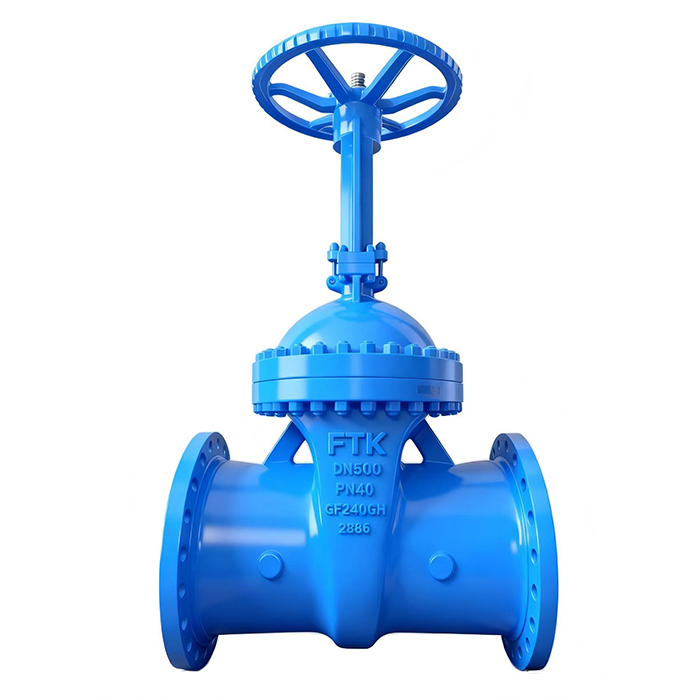
The gate valve is the workhorse of isolation. Its primary objective is to stay out of the way when the system is running at full capacity. FTK’s professional gate valves are designed with a “Full Bore” philosophy, meaning the internal diameter of the valve matches the internal diameter of the pipe.
In a professional full-bore gate valve, the gate (or wedge) is designed to retract completely into the valve bonnet when fully opened. This creates a “straight-through” pathway. Unlike other valve types where the disc or stem might remain partially in the flow stream, the gate valve ensures that the medium moves through the valve body as if it were a continuous piece of pipe. This design is crucial for systems that require regular cleaning or inspection via “pigging” tools.
From a fluid dynamics perspective, any obstruction causes turbulence, which leads to a “Pressure Drop” ($\Delta P$). A significant pressure drop across a valve means that the pump at the beginning of the line must use more electricity to maintain the required flow rate. By utilizing FTK’s gate valves with zero flow resistance, facilities can achieve a near-zero pressure drop, directly translating to thousands of dollars in energy savings over the valve’s service life.
While “Reduced Bore” valves are smaller and cheaper, they are often a “false economy” in high-capacity pipelines. The narrowing of the flow path increases velocity and friction, leading to premature wear and higher energy costs. FTK’s commitment to full-bore precision ensures that the valve seat and flow path are perfectly aligned, eliminating the turbulence often found in lower-quality alternatives.
The correlation between flow resistance and energy consumption is linear. In large-scale water distribution or oil transport, even a 5% reduction in flow resistance across multiple valve stations can result in a significant decrease in carbon footprint and utility costs. Professional Gate Valves are specifically engineered to provide the lowest $K_v$ (flow coefficient) values in the industry, making them the superior choice for long-distance transmission lines where efficiency is paramount.
Efficiency is not only about flow; it is about containment. A valve that leaks internally is a constant drain on system pressure. FTK utilizes advanced bi-directional sealing technology, ensuring that the gate forms a bubble-tight seal regardless of which direction the pressure is coming from. This is achieved through precision-ground seating surfaces and high-resiliency elastomers or metal-to-metal seals, depending on the temperature and media requirements.
While gate valves are built for isolation, Globe Valves are the masters of regulation. Optimizing a pipeline often requires “throttling”—adjusting the flow to meet specific demand. The spherical body and S-shaped flow path of a globe valve allow for precise linear control over the fluid. This precision prevents “over-pumping” and ensures that the downstream processes receive the exact volume required, further enhancing overall system efficiency.

(All images are sourced from the internet. In the event of any copyright infringement, please contact us and we will remove the content promptly.)
| Feature | Gate Valves | Globe Valves |
| Primary Function | On/Off Isolation (Fully open/closed) | Throttling & Flow Regulation |
| Flow Resistance | Extremely Low (Zero in Full Bore) | Moderate to High (S-shaped path) |
| Pressure Drop | Minimal ($\Delta P \approx 0$) | Significant due to directional change |
| Operation Speed | Slow (Prevents Water Hammer) | Faster than Gate Valves |
| Sealing Direction | Bi-directional Sealing | Typically Uni-directional |
| Ideal Application | Main Transmission Lines | Cooling Systems, Fuel Oil Systems |
A common threat to pipeline efficiency is the “Water Hammer” effect—a pressure surge caused by the rapid change in fluid momentum. Professional gate and globe valves are “multi-turn” valves. Because they require several rotations of the handwheel to close, they naturally ensure a gradual stop to the flow. This slow-closing mechanism protects the pipe walls and joints from structural damage, ensuring the long-term integrity of the entire network.
The environment inside a valve is often harsh, involving corrosive chemicals or abrasive sediments. FTK prioritizes material integrity, using high-grade cast steel, ductile iron, and corrosion-resistant alloys. By preventing internal corrosion and “pitting,” the valve maintains its smooth internal surface. A smooth surface reduces friction, which in turn maintains the flow efficiency established during the system’s first day of operation.
B2B procurement often involves navigating space constraints.
Rising Stem Valves: Ideal for surface-level installations where operators need a visual “at-a-glance” confirmation of the valve position.
Non-Rising Stem (NRS) Valves: Perfect for underground water systems or tight shipboard engine rooms.
FTK provides both configurations, ensuring that regardless of the installation environment, the operator has the right tool for efficient management.
Efficiency is a marathon, not a sprint. To maintain the low flow resistance of a Gate Valve, regular maintenance is essential.
Periodic Cycling: Operating the valve once every few months prevents sediment buildup in the seat.
Lubrication: Keeping the stem threads lubricated ensures smooth operation and prevents mechanical fatigue.
Seal Inspection: Replacing packing and gaskets before they fail prevents the pressure loss associated with external leaks.
Q1: How does a full bore gate valve improve pipeline efficiency? A full bore design creates an unobstructed flow path that matches the pipe’s internal diameter, resulting in near-zero pressure drop and reduced pumping energy costs.
Q2: Can I use a gate valve for precise flow regulation? No, gate valves are designed strictly for isolation (on/off), while globe valves should be used if your system requires precise throttling or flow regulation.
Q3: Why are professional valves effective at preventing water hammer? Professional gate and globe valves are multi-turn components that close slowly, preventing the sudden pressure surges that lead to structural pipe damage.
Q4: What is the main maintenance advantage of choosing FTK valves? With 14 years of manufacturing expertise, FTK valves use high-grade castings and precision-ground seals that significantly extend service intervals and reduce unplanned downtime.
Optimizing pipeline efficiency is a multifaceted challenge that requires the right hardware and the right expertise. By integrating the high-flow capacity of Gate Valves with the precise regulation of Globe Valves, industrial operators can achieve a balance of performance and reliability.
With 14 years of manufacturing excellence, FTK remains committed to providing the global water, oil, and gas industries with valves that don’t just meet standards—they set them. When every drop of pressure and every kilowatt of energy counts, choosing a professional manufacturer is the first step toward a truly efficient pipeline.