

For brand owners, wholesalers, and OEM procurement managers, selecting the right valve isn’t just about the price point—it’s about safety, legal compliance, and long-term liability. Navigating the maze of American Petroleum Institute (API) standards is essential to avoid costly project delays or catastrophic field failures.
This guide clarifies the most common API standards to help you source with confidence.
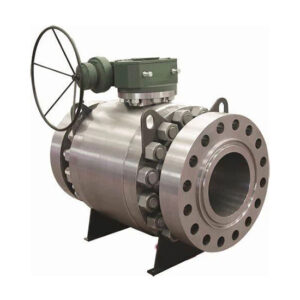
If your project involves the transport of oil or natural gas, API 6D is your primary specification.
It covers the design, manufacturing, and testing of ball, check, gate, and plug valves specifically for pipeline service.
Key Range: Applicable for pressure classes 150 to 2500.
Pro Tip: Do not use API 6D for subsea applications; those require API 6DSS.
Why it matters: Compliance ensures your valves can handle the high-pressure surges and corrosive media typical of long-distance transport.
(All images are sourced from the internet. In the event of any copyright infringement, please contact us and we will remove the content promptly.)
When you need steel gate valves for heavy-duty applications, why should API 600 be your go-to standard? What makes API 600 steel gate valves suitable for tough industrial environments?
API 600 covers bolted bonnet steel gate valves with flanged or butt-welding ends, designed specifically for petroleum refinery and related applications where corrosion, erosion, and extreme service conditions demand full port openings, heavy wall sections, and large stem diameters.
It applies to nominal pipe sizes from DN 25 (NPS 1) to DN 1050 (NPS 42) and pressure classes from 150 to 2500.
· Application: Petroleum refineries and related heavy-duty industrial scenarios with corrosion, erosion and extreme service conditions, covering sizes DN 25–DN 1050 (NPS 1–42) and pressure classes 150–2500.
· Benefit: Ensures structural strength, long-term durability and industry compliance for high-stress, heavy-duty valve service.
What are compact steel gate, globe, and check valves, and when should you specify API 602?
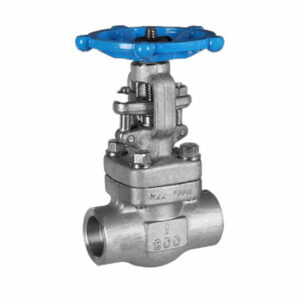
API 602 applies to NPS 4 (DN100) and smaller compact valves, making them ideal for tight spaces like instrument, sampling systems, and high-pressure small-bore branches in refineries, chemical plants, and power facilities. It is the standard for forged steel valves. It covers sizes from NPS 1/4 (DN8) to NPS 4 (DN100) and pressure classes from 150 to 1500, with connection options including threaded, socket weld, and butt-weld ends.
Application: High-pressure, low-space environments.
Benefit: Provides a balance of heavy-duty performance in a compact footprint.
What makes API 603 gate valves corrosion-resistant, and when should you use them?
API 603 specifies requirements for corrosion-resistant bolted bonnet gate valves, typically made from stainless steel or high-alloy metals to handle corrosive fluids, steam, and hydrocarbons in refineries, chemical plants, and offshore platforms. It complies with ASME B16.34 for pressure-temperature ratings and offers optional fire-safe designs per API 607.
Choosing between these three depends entirely on your media and environment:
API 600 (Steel Gate Valves): This is the “heavyweight” standard for refineries. It mandates thicker walls and larger stem diameters for high-stress environments.
API 603 (Corrosion-Resistant): Ideal for chemical plants or offshore platforms. These valves use stainless steel or high-alloy metals to resist oxidation and chemical wear where a standard API 600 valve would fail.
API 602: Falling between API 600 and API 603 in scope, this standard specifies small-diameter valves, generally from 1/2 inch to 2 inches, designed for 800 psi service. Its compact structure makes it particularly suitable for small valve applications typically installed in space-restricted piping arrangements.
If you’re sourcing metal ball valves, why is API 608 important
API 608 governs metal and soft-seated ball valves. For procurement, the biggest decision here is the seating design:
Floating Ball: Economical; the ball moves slightly to seal against the downstream seat. Best for lower pressures.
Trunnion-Mounted: The ball is anchored at the top and bottom. This is necessary for high-pressure or large-diameter valves where lower operating torque is required.
API 608 covers metal and soft seated quarter-turn ball valves, including both floating and trunnion ball designs, which are the industry standard for pipeline shut-off due to their tight, leak-free sealing. Floating ball valves have a ball held by seat compression, moving slightly downstream under pressure, while trunnion-mounted balls are anchored top and bottom, requiring lower torque and handling larger sizes and higher pressures.
Critical Quality & Safety Standards
| Standard | Purpose | Why You Need It |
| API 598 | Valve Inspection & Testing | The universal “pass/fail” test for leakage and structural integrity. |
| API 607 | Fire Test Certification | Mandatory for valves handling flammable fluids; ensures the valve stays sealed during a fire. |
| API 609 | Butterfly Valves | Categorizes valves into Category A (General purpose) and Category B (High-pressure/temperature). |
| API 623 | Globe Valves | The go-to for throttling and flow regulation applications. |
API 598 specifies inspection, examination, and pressure test requirements for all types of valves—including gate, globe, plug, ball, check, and butterfly valves—regardless of their seat type (resilient, nonmetallic, or metal-to-metal). It includes tests like shell tests, backseat tests, and low/high-pressure closure tests to ensure valve integrity and leakage control.
How does API 607 test valve fire safety?
API 607 is the global benchmark for fire-safe valve design and testing, requiring valves to maintain positive shut-off and structural integrity during and after a 30-minute hydrocarbon fire at temperatures of at least 1027°C (1880°F). It applies to quarter-turn valves (ball, butterfly, plug) used in flammable service, complementing other standards like ASME B16.34 by ensuring fire resilience.
API 609 covers butterfly valves, with Class A and Class B designations distinguishing between different performance levels—including leakage rates, torque requirements, and structural integrity. Class A valves are typically designed for more demanding applications, while Class B valves are suitable for less critical service.
API 623 specifies requirements for rising stem, bolted bonnet, and pressure seal bonnet steel globe valves, designed for high-temperature, high-pressure applications in oil and gas, petrochemical, and power industries. It covers sizes from NPS ½” (DN15) to NPS 24” (DN600), pressure classes up to 2500, and includes features like tight shutoff and low-pressure drop designs.
With so many API standards, it’s easy to get confused—but choosing the right one is critical for your project’s success. Below is a clear breakdown to help you decide which standard to use, based on your project’s needs:
For Mainline Pipelines: Specify API 6D.
For Refinery Throttling: Look for API 623 (Globe) or API 600 (Gate).
For High-Risk Flammable Areas: Ensure the vendor provides API 607 fire-safe certification.
For Small-Bore/Instrumentation: Stick to API 602.
Pipeline systems for petroleum or natural gas (excluding subsea pipelines), valves that need to meet strict design, testing, and documentation requirements, or applications requiring pressure ratings from Class 150 to Class 2500. If you’re a distributor or importer sourcing pipeline valves, API 6D is non-negotiable for compliance and reliability.
Heavy-duty steel gate valves for refineries or industrial applications, valves with flanged or butt-welding ends, full port openings, or heavy wall sections to withstand corrosion and erosion. For brand owners and OEM/ODM procurement managers needing durable, high-performance gate valves, API 600 is the standard of choice.
Compact steel gate, globe, or check valves (NPS 4 or smaller), valves for tight spaces like instrument lines or high-pressure small-bore branches, or forged bodies for enhanced structural integrity. If you’re a wholesaler sourcing space-saving, high-pressure valves, API 602 is the right fit.
(All images are sourced from the internet. In the event of any copyright infringement, please contact us and we will remove the content promptly.)
Metal or soft seated quarter-turn ball valves, floating or trunnion ball designs, or valves for leak-free shut-off in pipeline applications. For importers and procurement managers needing versatile, reliable ball valves, API 608 ensures consistent quality and performance
By insisting on these specific API standards during the RFQ (Request for Quote) process, you protect your brand reputation and ensure the mechanical integrity of your supply chain.
While both standards ensure safety, their scope and rigor differ significantly. ASME is the “baseline” for general industry, while API is the “premium” upgrade for high-stakes energy environments.
| Feature | API (American Petroleum Institute) | ASME (American Society of Mechanical Engineers) |
| Primary Focus | Oil, Gas, and Petrochemical sectors. | General industrial, power, and water plants. |
| Wall Thickness | Often requires thicker walls (e.g., API 600 vs. B16.34) for durability. | Follows standard B16.34 pressure-temperature ratings. |
| Testing Rigor | Extremely Strict. Longer test durations and zero-leakage requirements. | Standard. Focused on basic functional safety and interchangeability. |
| Design Intent | Built for “severe service” (corrosive, high-pressure, hazardous). | Built for “versatility” across various manufacturing sectors. |
| Key Advantage | High reliability; reduces unplanned downtime in 24/7 operations. | Cost-effective and widely available for non-critical systems. |
ASME B16.34 is a universal standard covering design pressure-temperature ratings, wall thickness, and material selection for all types of valves (gate, globe, ball, etc.) across general industrial applications. It sets basic design requirements but does not mandate specific structural features or fire testing.
API 600, on the other hand, is an industry-specific standard focused solely on bolted bonnet steel gate valves for the oil and gas industry, with stricter requirements for structural strength, metal sealing, and fire safety (mandatory API 607 compliance). For brand owners and distributors, API 600 valves are heavier and more robust than ASME B16.34 valves of the same pressure rating, making them ideal for harsh, heavy-duty applications—while ASME B16.34 is sufficient for general industrial piping (e.g., water treatment, low-pressure steam).
Q: Which API standard is required for mainline oil and gas pipeline valves?
A: API 6D is the non-negotiable standard for mainline pipeline applications (excluding subsea).
Q: What API standard applies to small-bore, compact valves for tight spaces?
A: API 602 is suitable for NPS 4 (DN100) and smaller compact valves in restricted spaces.
Q: Which API standard ensures valve fire safety for flammable fluid service?
A: API 607 is mandatory for valves handling flammable fluids to ensure fire-safe sealing.
Q: What is the key difference between API and ASME valve standards? A: API focuses on severe oil/gas service with stricter testing, while ASME is a general industry baseline.
Selecting the right API valve standard is critical for procurement professionals to ensure safety, compliance, and long-term reliability in oil, gas, and industrial applications.
When you need API-compliant valves that meet the strictest industry requirements—backed by professional expertise and reliable performance—turn to FULL THINK VALVE (FTK).